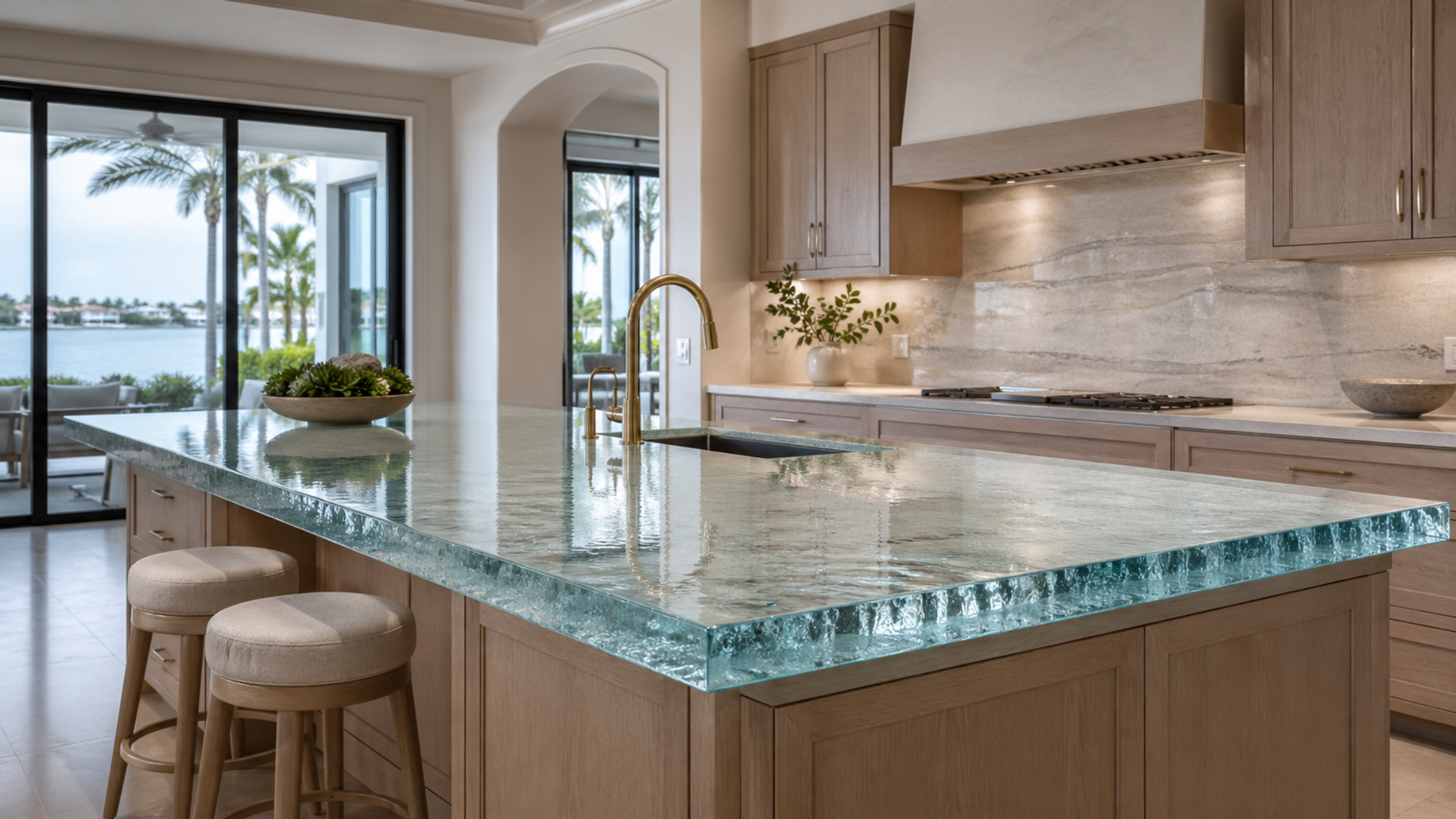
Statement kitchens
Best when the glass island or perimeter surface is designed as an intentional focal point, not an afterthought.
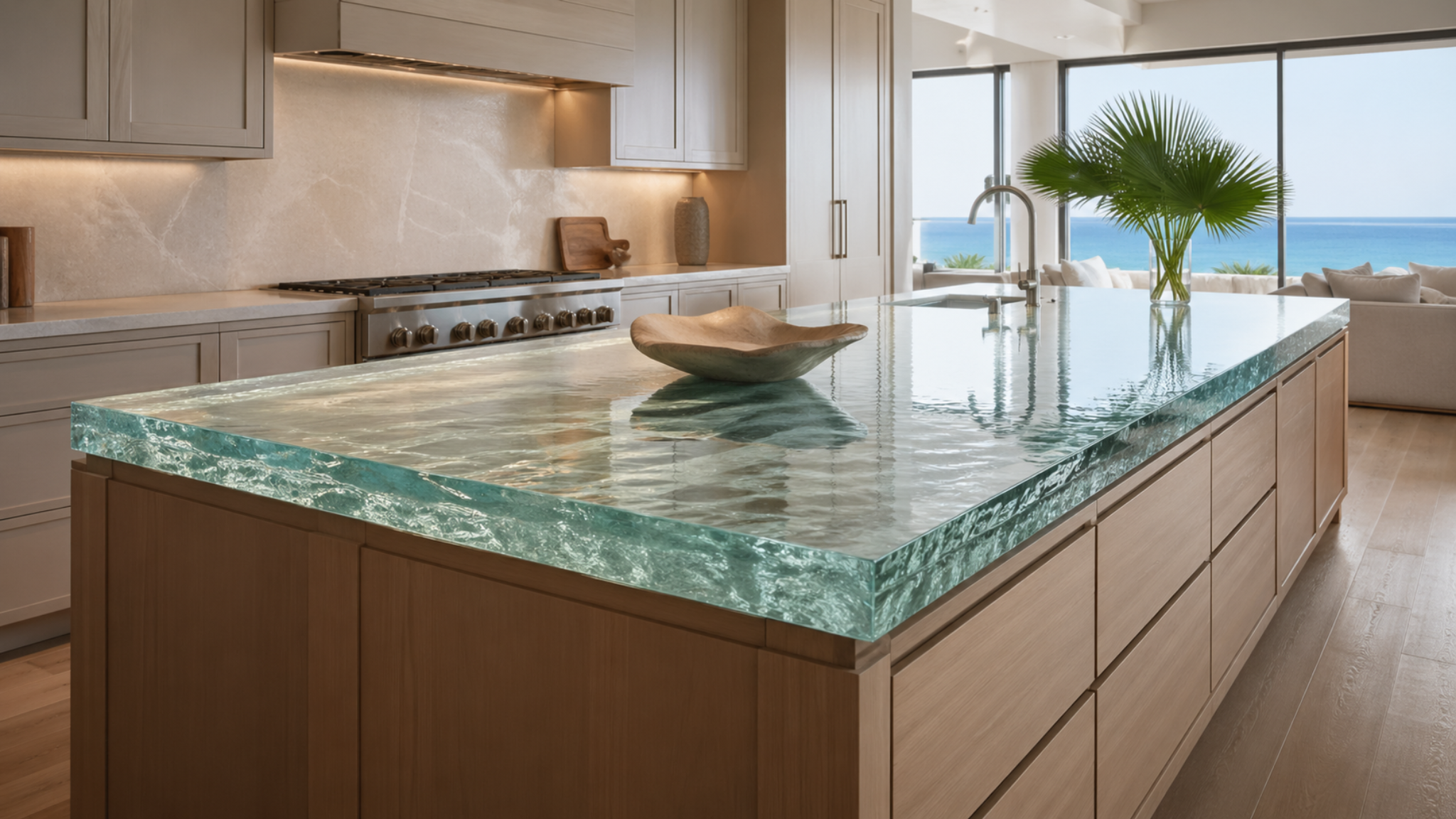
Glass can be shaped into a highly personal countertop, bar, vanity, backsplash, table, or reception surface when the design is planned with the right thickness, edge detail, support, cutouts, and care expectations.
The strongest glass countertop projects use the material intentionally: to show thickness, texture, color, translucency, hand-polished edgework, or subtle illumination. It can be quiet and refined, or it can become the room’s primary feature.
Custom architectural glass surface. Options may include kiln-formed texture, laminated detail, back-painted color, bonded elements, custom thickness, and hand-finished edges.
Usually premium. Cost is shaped by thickness, texture, finish, edge profile, cutouts, support, lighting, shipping, install complexity, and how custom the design becomes.
Nonporous and easy to wipe clean, but it still needs practical protection from impact, abrasive cleaning, unsupported spans, and unrealistic expectations around visible fingerprints or reflections.
Excellent for feature islands, bars, bath vanities, backsplashes, tabletops, conference surfaces, reception counters, and projects where the surface should feel unmistakably custom.
Glass countertops usually make sense when the surface is meant to contribute something special: thickness, transparency, color depth, texture, illuminated edgework, or a completely custom shape. It is rarely selected because it is the most economical countertop path.
Cost is affected by the glass type, slab thickness, custom texture, back-painted or laminated treatment, edge profile, sink and faucet cutouts, support requirements, packaging, shipping, and installer coordination.
The best value comes from using glass where it has a clear design purpose. A bar top, vanity, backsplash, reception counter, or statement island can justify the investment more confidently than forcing glass into a project that only needs a quiet work surface.
The application determines the right posture. A kitchen island needs practical support and daily-use clarity. A bar can carry more texture and subtle lighting. A vanity can be cleaner and more spa-like. A reception surface can be more sculptural.
Best when the glass island or perimeter surface is designed as an intentional focal point, not an afterthought.
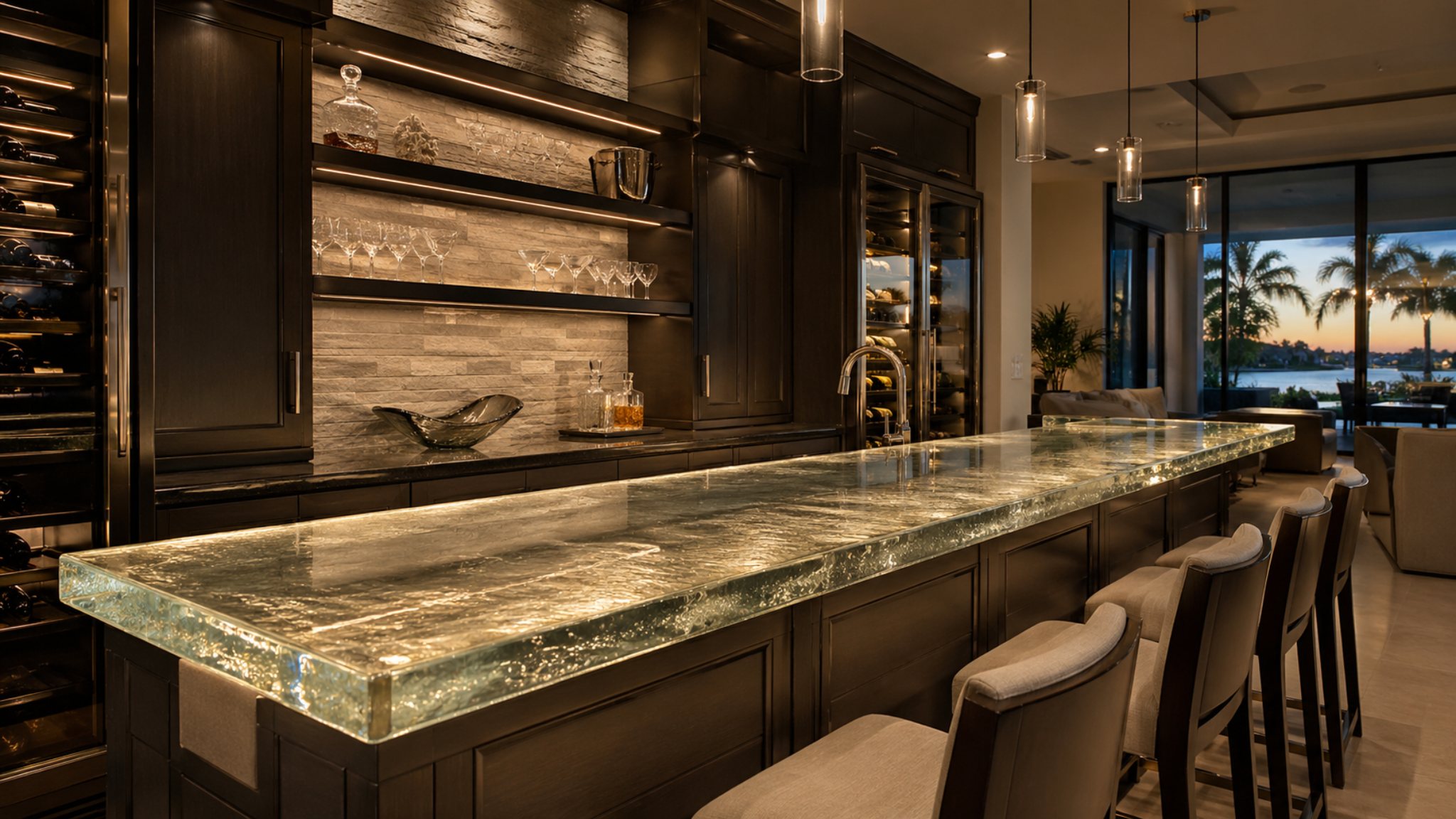
Subtle backlighting, thick edges, and textured glass can make a bar feel custom without turning it into a nightclub.
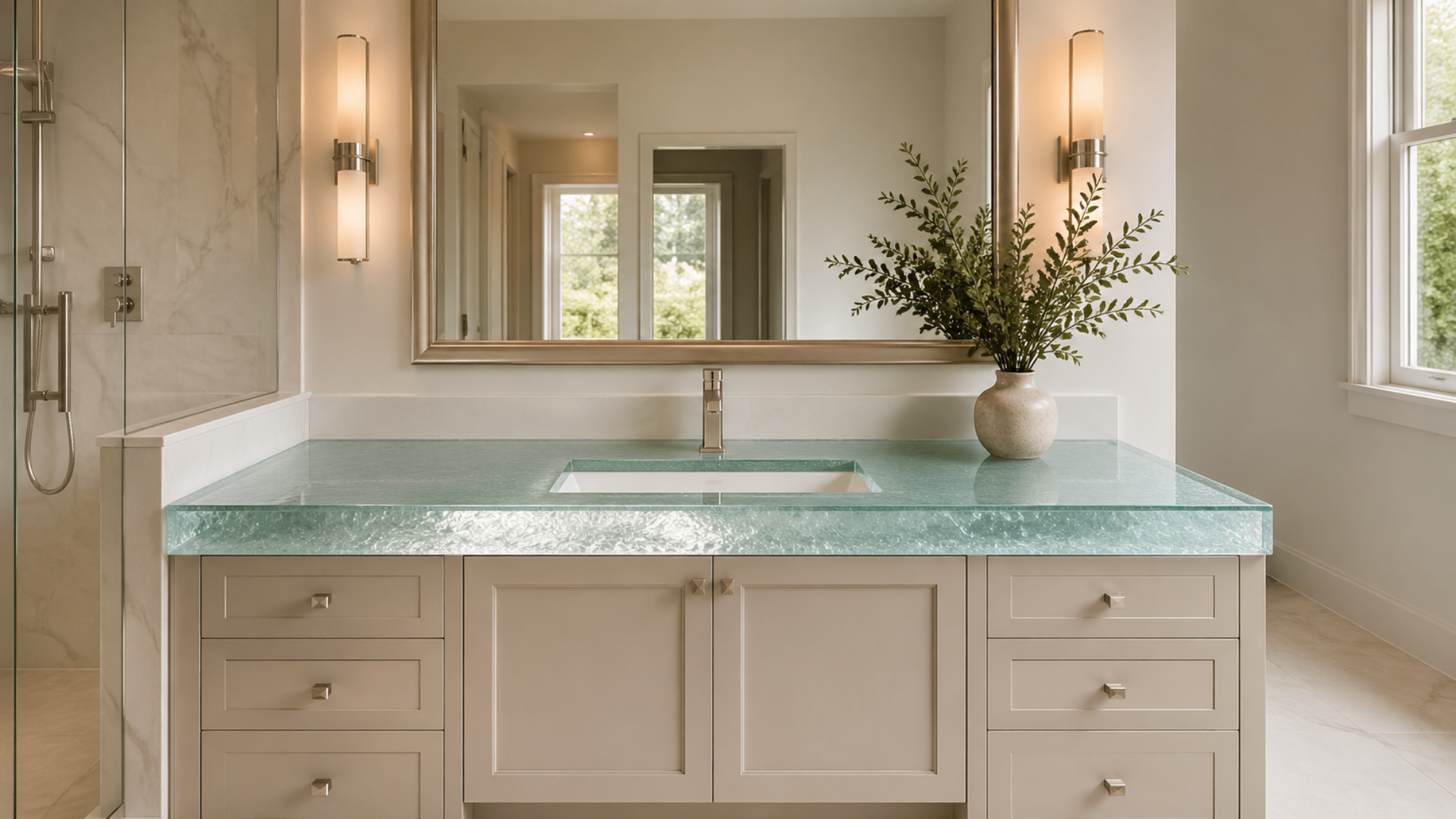
A glass vanity top can feel clean, spa-like, and highly tailored when the sink detail and edge are resolved early.
The care conversation should happen before selection. A homeowner who wants a completely forgiving prep surface may be better served by another material. A homeowner who wants a visually distinctive feature and is comfortable with reasonable protection may be an excellent fit.
The goal is not to make glass sound fragile. The goal is to specify it honestly so the finished surface stays beautiful and the homeowner understands how to live with it.
A thick glass edge can be the entire reason the surface works. It catches light, gives the top substance, and makes the material feel handcrafted. Too much color, too much lighting, or the wrong scale can make the same material feel less refined.
Back-painted glass can help control color. Textured glass can add movement. Laminated or crackle-style glass can add drama. The key is deciding how much attention the surface should command before the design moves into fabrication.
In a Black Label project, glass should support a calm, premium room. Even when it is the feature, it should feel intentional, not loud.
Glass countertop success depends on the details that are easy to underestimate during early selection. The material is custom by nature, so the final decision set should happen before fabrication begins.
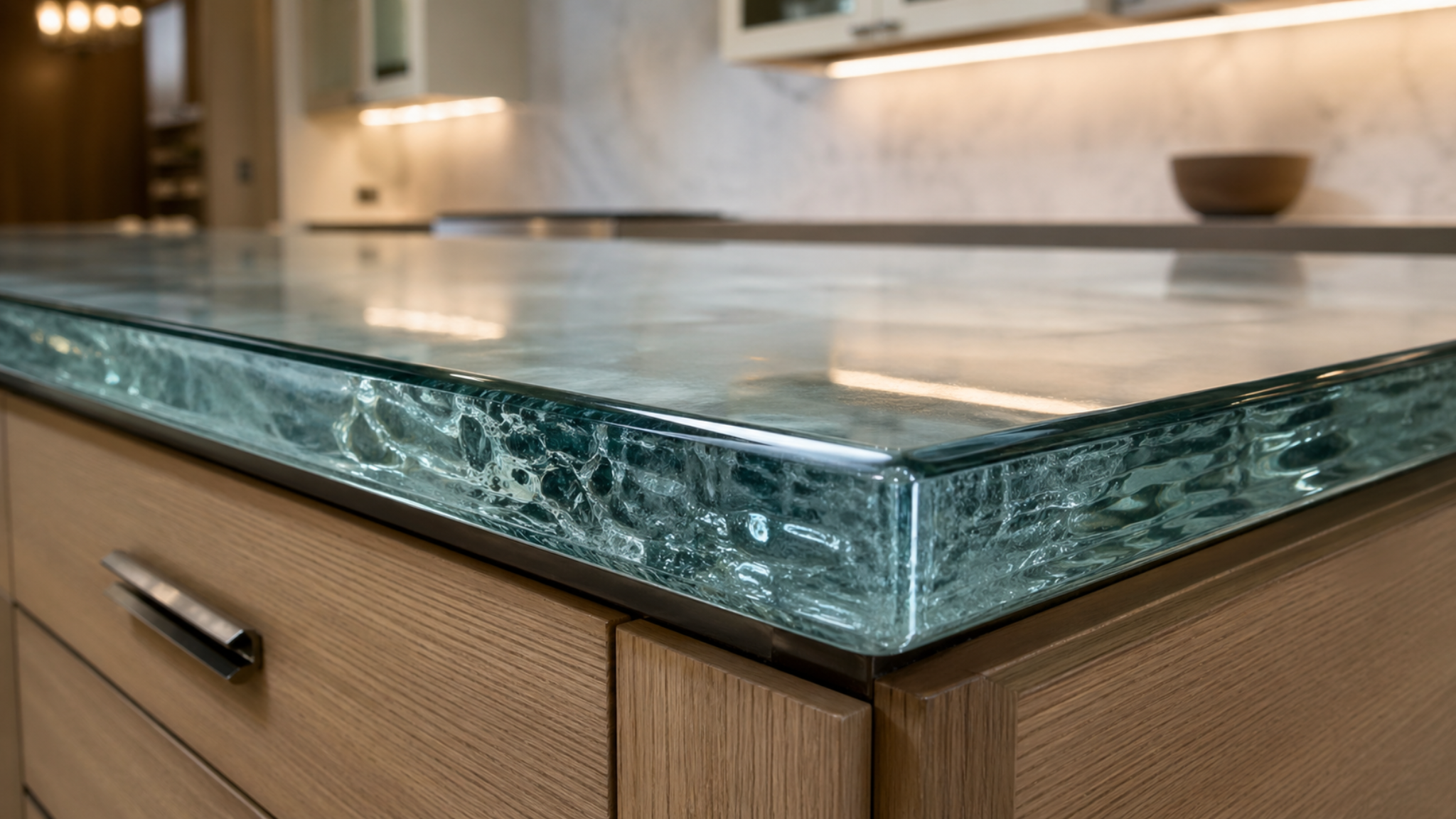
The edge controls the visual weight. Polished, eased, bullnose, custom textured, or sculpted profiles each change the feel of the room.
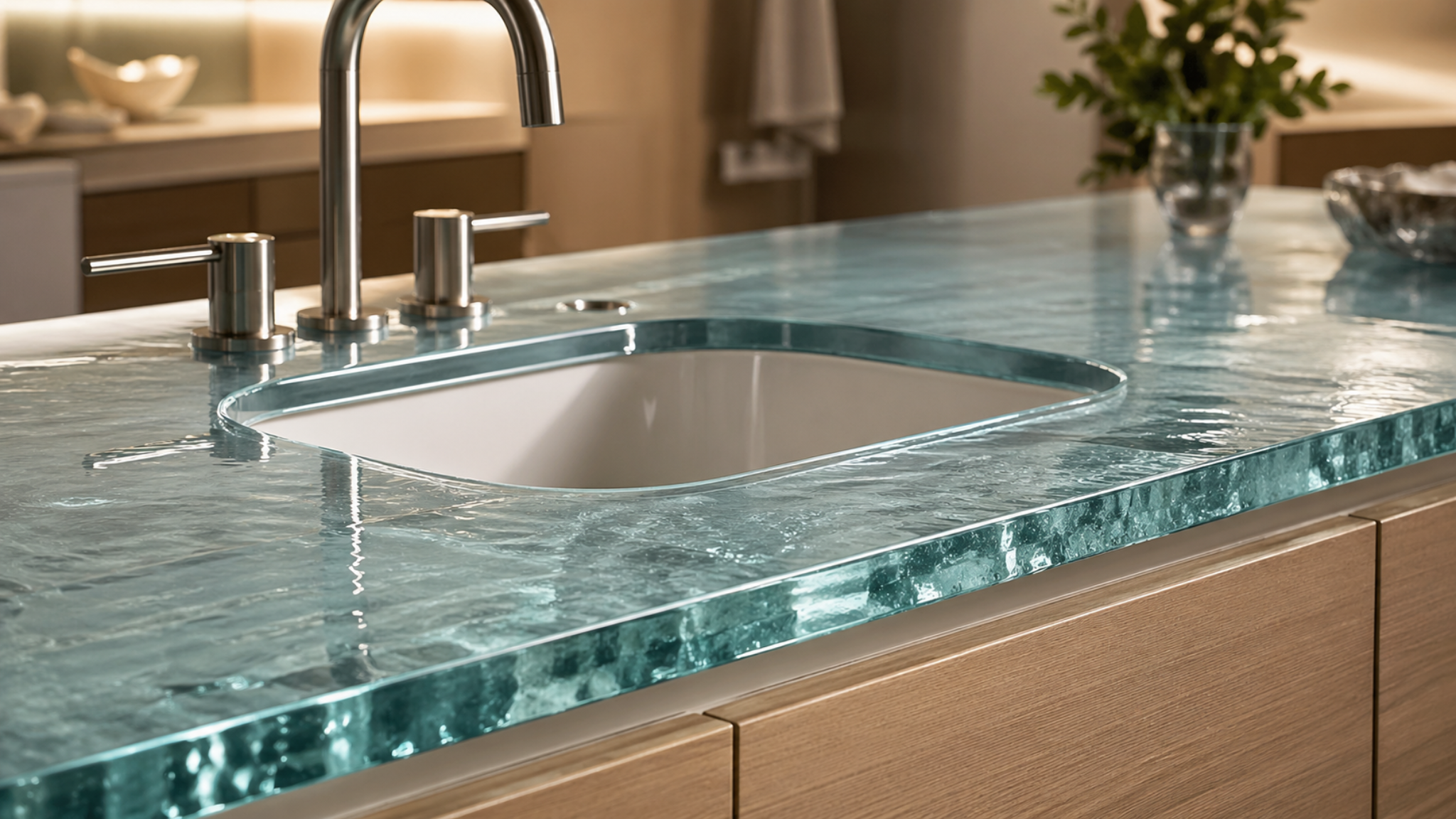
Sink openings, faucet holes, cooktop planning, and inside corners require accurate templates and early coordination.
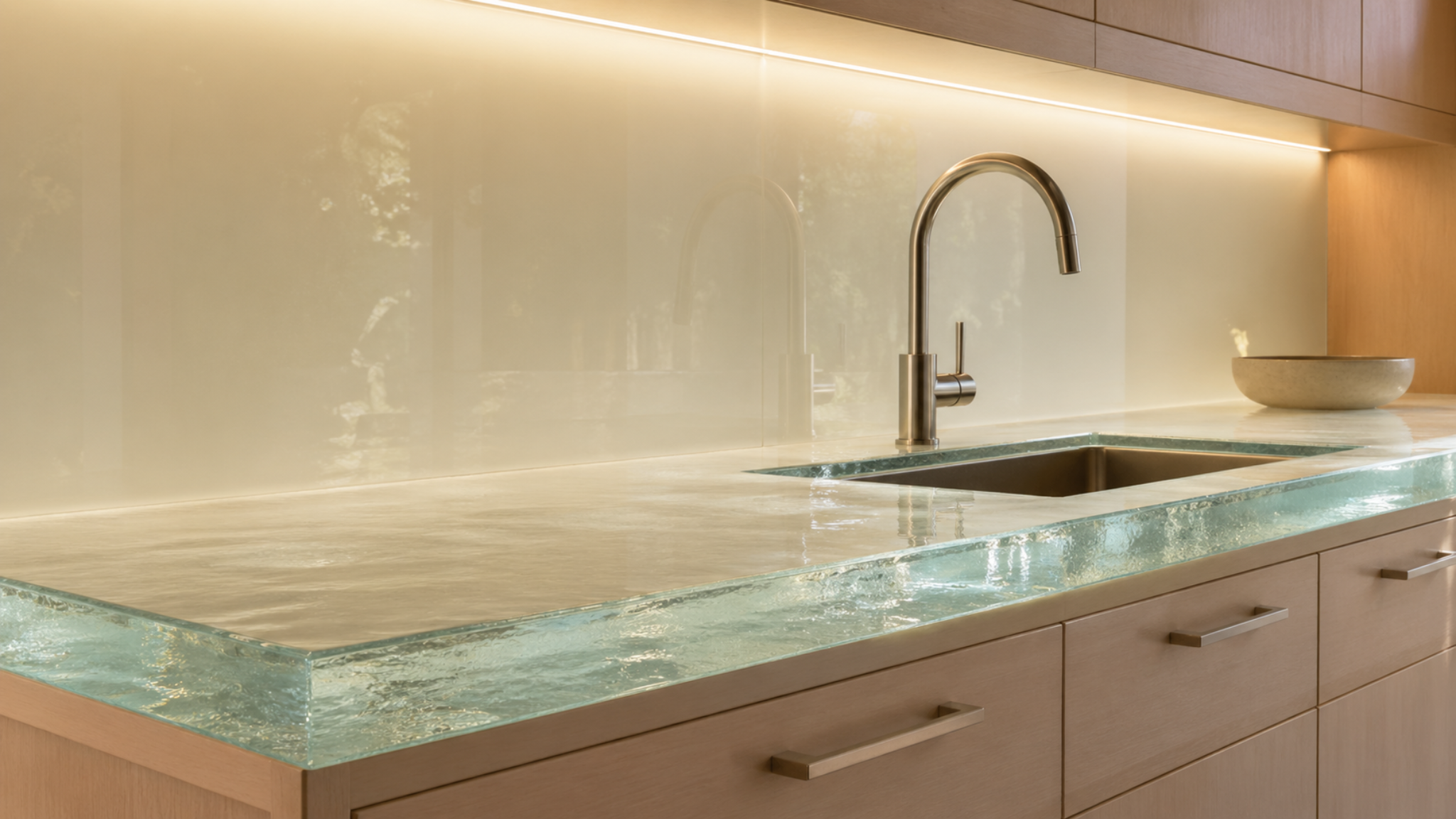
Glass backsplashes can create a seamless, easy-to-clean surface that coordinates with the countertop instead of competing with it.
These details should be resolved before template, ordering, fabrication, and installation. They protect the final look and reduce expensive surprises.
Confirm the intended thickness and how it affects cost, weight, support, visual scale, and edge presence.
Review samples in the project lighting. Clear, low-iron, tinted, textured, laminated, and back-painted looks all read differently at full scale.
Select the edge profile intentionally. The edge is often the most visible design feature of a thick glass surface.
Confirm sink, faucet, cooktop, outlet, and accessory locations before fabrication. Glass does not tolerate casual field changes.
Review overhangs, standoffs, brackets, cabinet support, sink rails, and any raised bar conditions before signoff.
Use lighting with discipline. Check glow level, color temperature, diffusion, service access, and whether the result still feels residential.
Glass is strongest when it is treated as part of the architecture. It can elevate a kitchen, bar, vanity, backsplash, office, or reception area when its thickness, texture, edge, color, and lighting all support the same idea.
When the project only needs maximum convenience or the most familiar resale choice, another countertop material may be a better fit. When the project needs a signature surface with depth and precision, glass becomes a serious option.
The strongest decision usually becomes clearer when the options are viewed side by side.
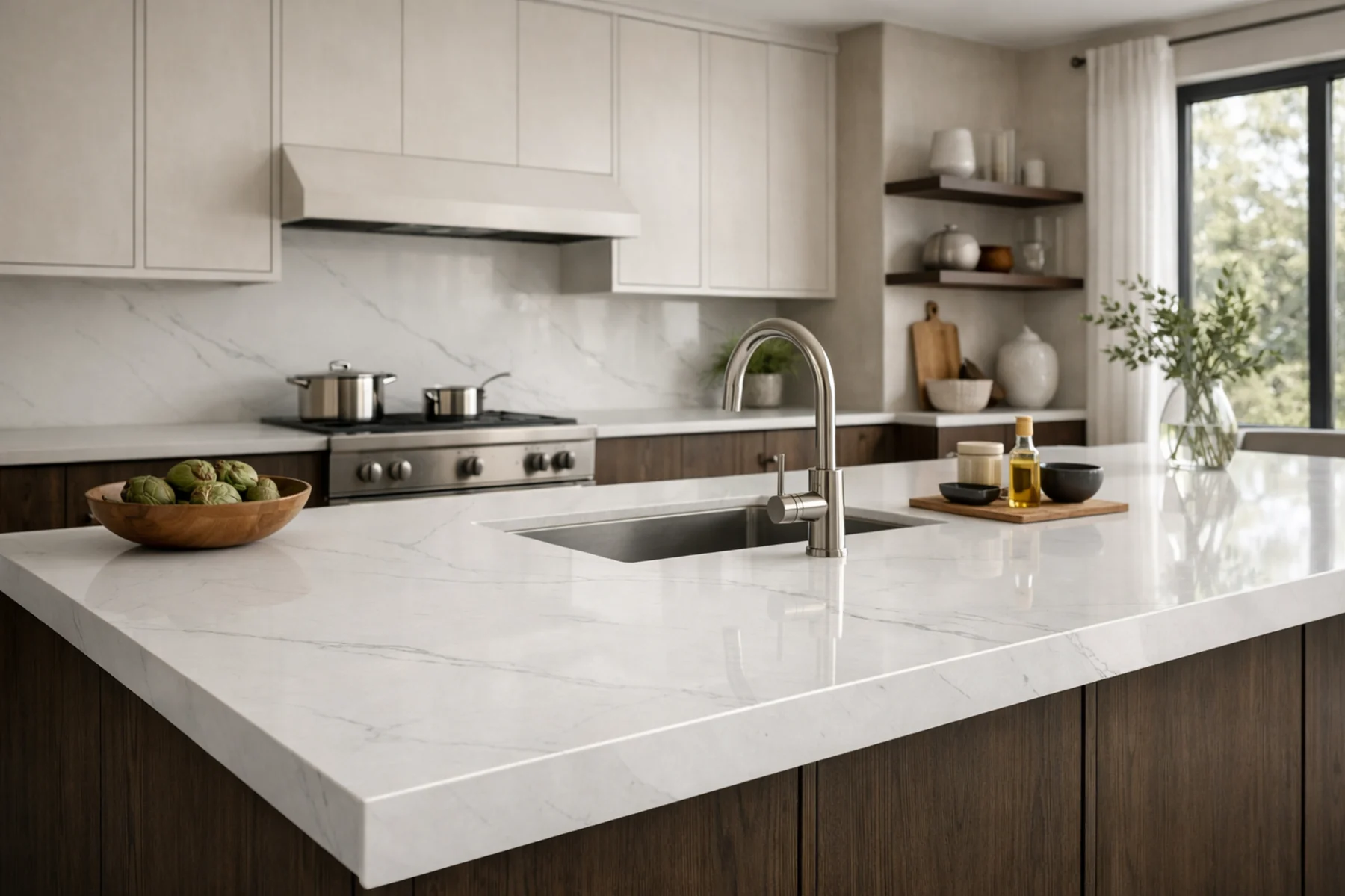
Engineered surface with controlled patterning, broad design range, and the easiest everyday care profile for many households.
Explore this page →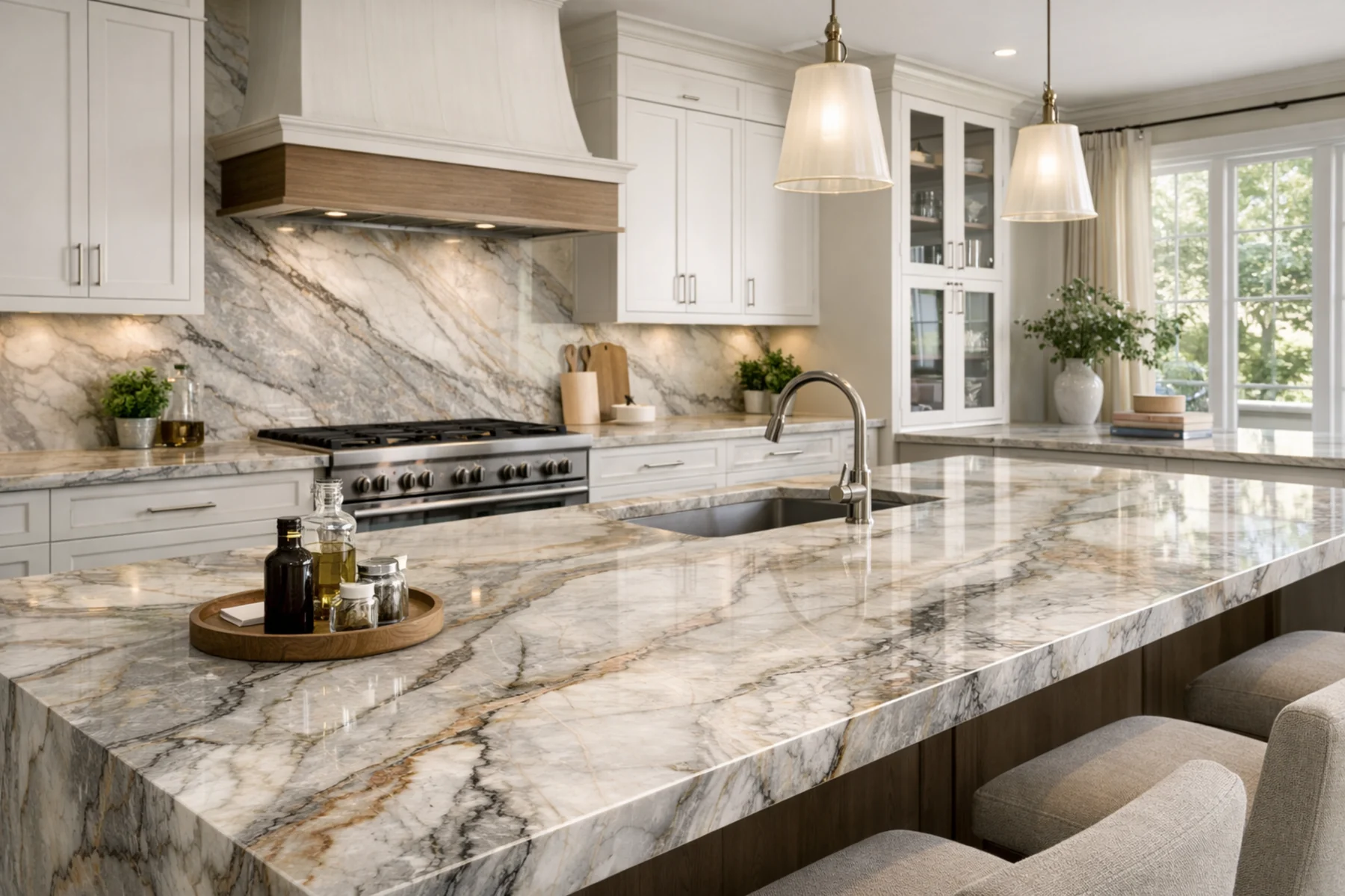
Natural stone with authentic movement, strong presence, and a premium fabrication posture that rewards careful slab selection.
Explore this page →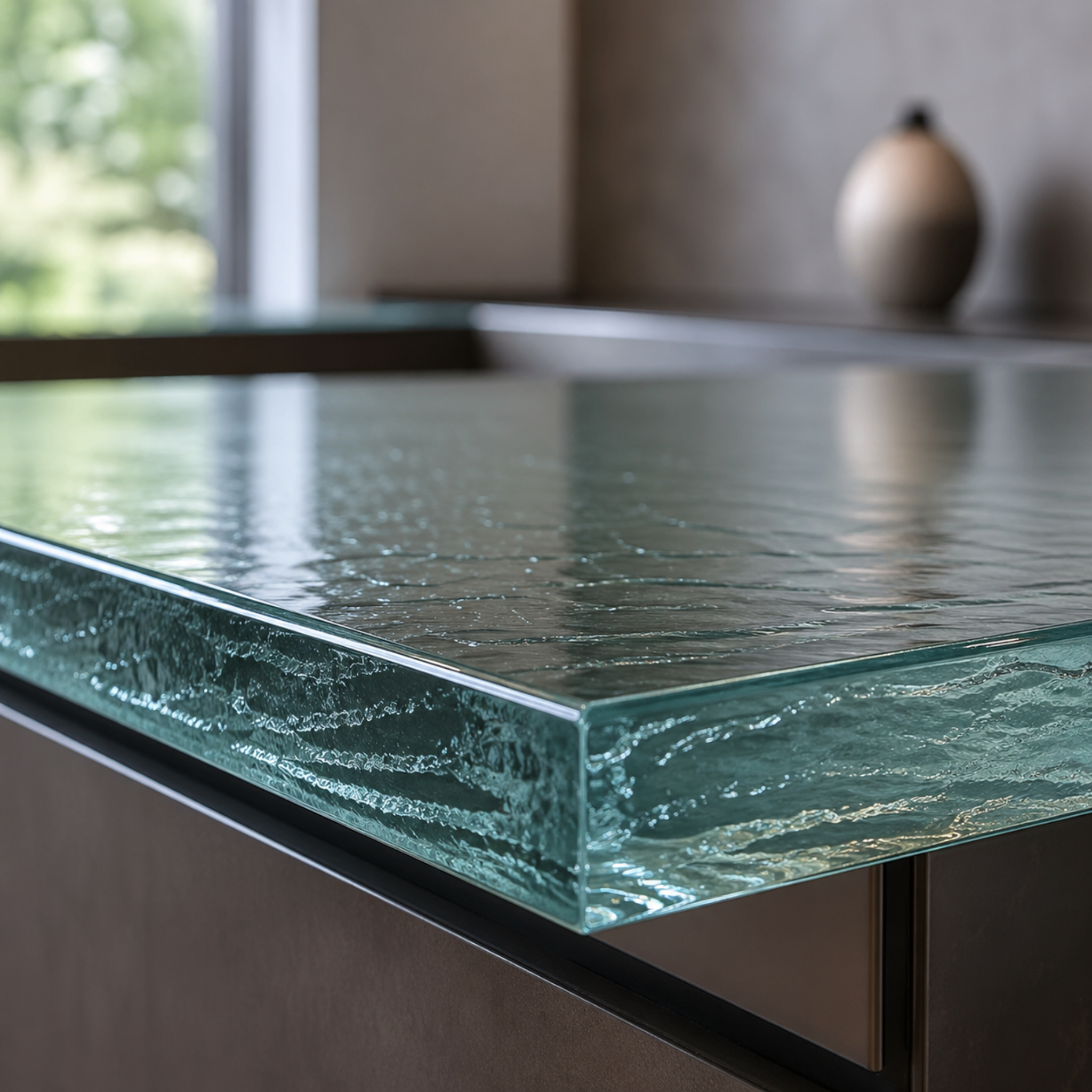
Custom architectural surface with thick glass depth, texture, color options, precise cutouts, and a distinctive handcrafted presence.
Current page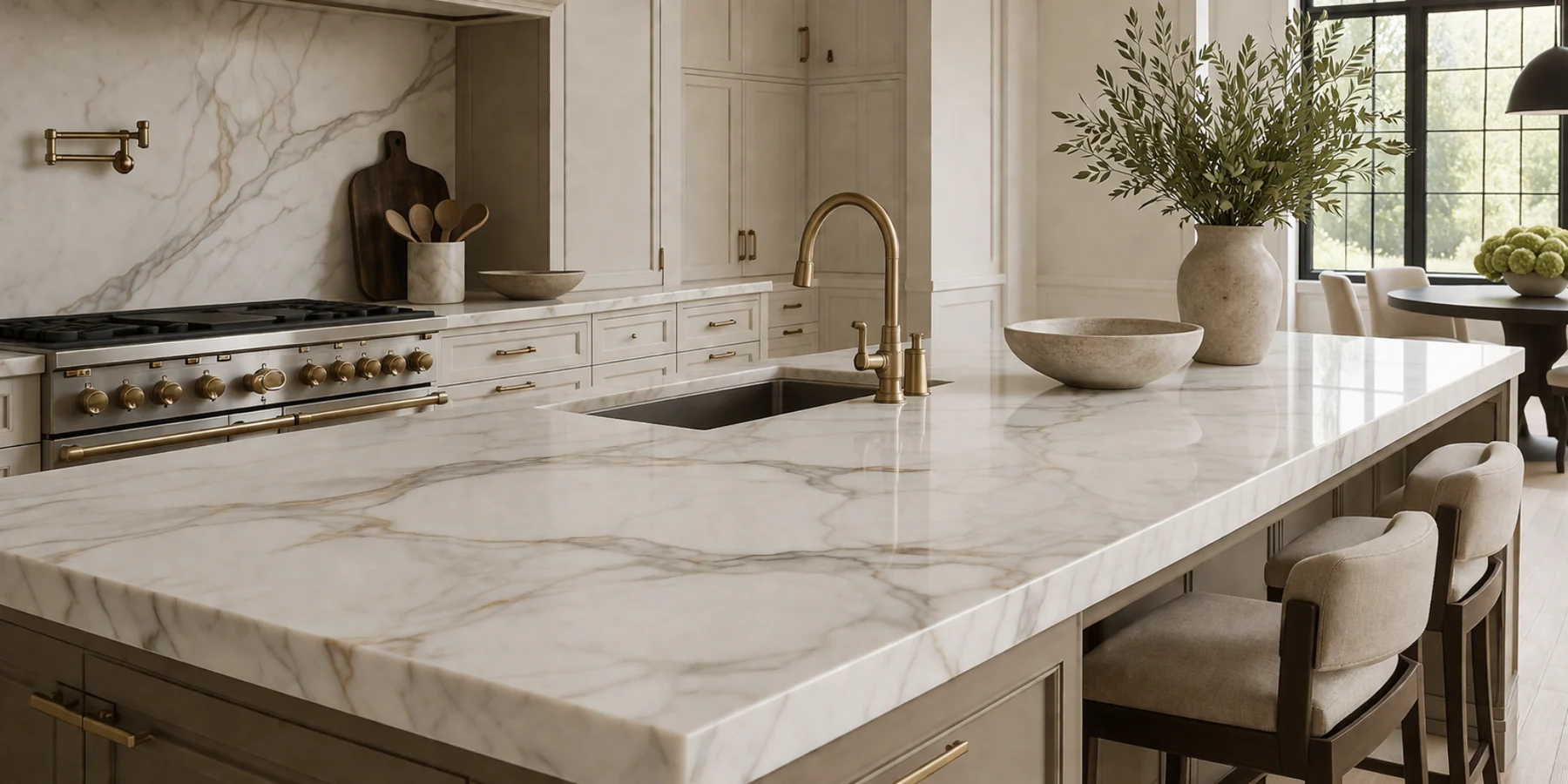
Luminous natural stone with timeless character, visible aging, and a maintenance profile that must be understood before selection.
Explore this page →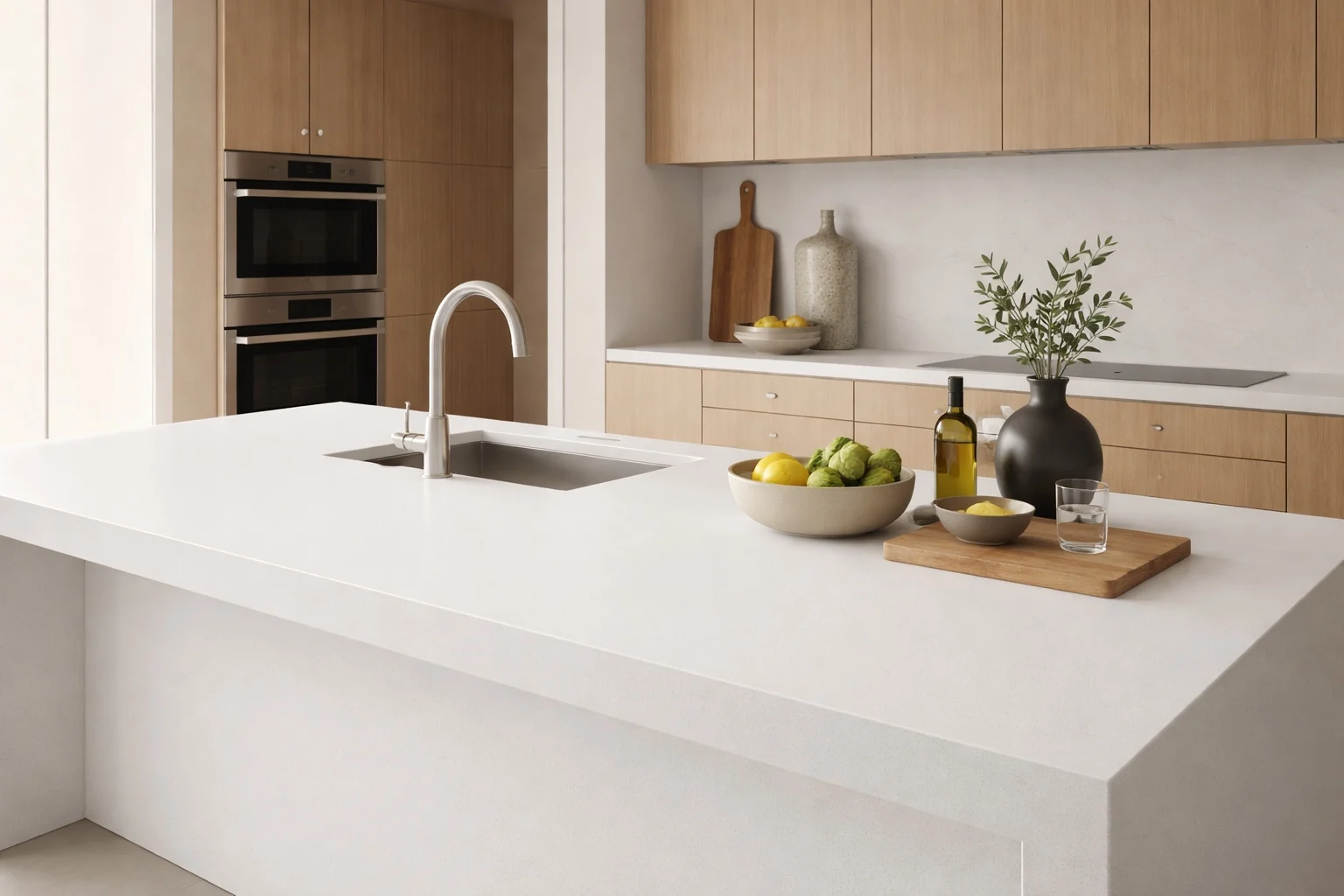
Crisp, nonporous slab material with a refined architectural look, strong stain resistance, and fabrication details that matter.
Explore this page →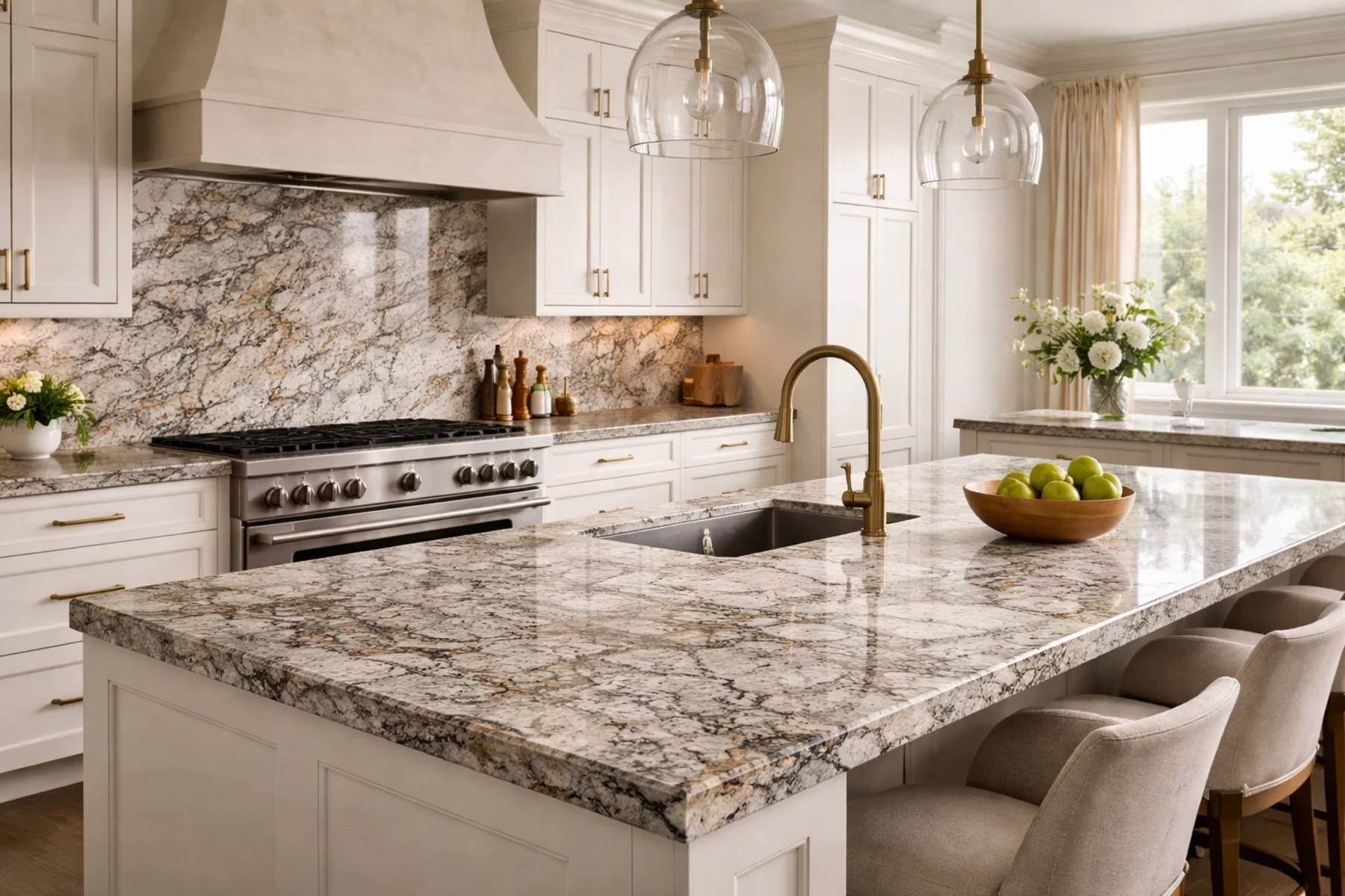
Durable natural stone with wide pricing range, real texture, and a current look when the slab is selected with discipline.
Explore this page →Black Label helps align glass thickness, texture, color, edge detail, cutouts, support, lighting, cabinetry, and care expectations so the finished surface feels intentional and livable.