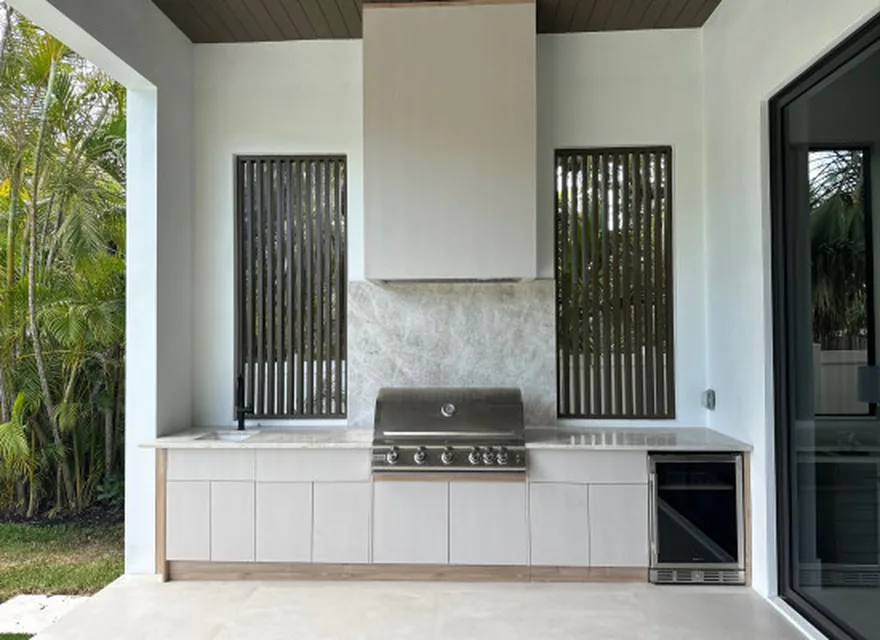
Plan the patio as a working room
Covered lanai, pool, landscape, openings, utilities, and seating all affect how the cabinet run should be planned.

Outdoor cabinetry has to coordinate cooking, storage, ventilation, weather exposure, appliance clearances, countertop support, and how the patio actually lives. The goal is not just a grill run. It is an outdoor room that works.
Outdoor kitchens live in a harder environment. The cabinetry has to work around heat, weather, moisture, appliances, utilities, ventilation, countertop support, cleanup, and how people actually move through the patio. A strong outdoor kitchen starts with the room, not just the grill.
Covered lanai, pool, landscape, openings, utilities, and seating all affect how the cabinet run should be planned.
Outdoor kitchen planning needs to solve appliance fit, weather exposure, airflow, storage, finish direction, and site conditions before order details are approved.
Grill size, insulation requirements, side burners, refrigeration, sink zones, and service access need to be planned before the cabinet layout is finalized.
Outdoor cabinets need materials, adhesives, hardware, and leveling systems that can handle moisture, heat, sun exposure, and changing site conditions.
Grill bases, propane pull-outs, and gas-powered appliances require proper airflow, clearances, and coordination with final appliance specifications.
The best outdoor kitchens handle utensils, serving pieces, trash, propane, beverages, towels, and cleaning without making the patio feel cluttered.
Finish color, slab door direction, countertop tone, and hardware should connect the outdoor kitchen to the home, patio, pool, and landscape.
Covered lanai, open patio, salt air, drainage, wall backing, utilities, and existing slab conditions all affect what should be designed and ordered.
Black Label can guide outdoor kitchen planning using an outdoor-rated cabinetry direction built around durable cabinet materials, slab door styling, stainless hardware, appliance coordination, ventilation planning, and modular cabinet sizing. Manufacturer specifications are reviewed as part of the planning process so the outdoor kitchen can be shaped around the actual site, appliance package, and finish direction.
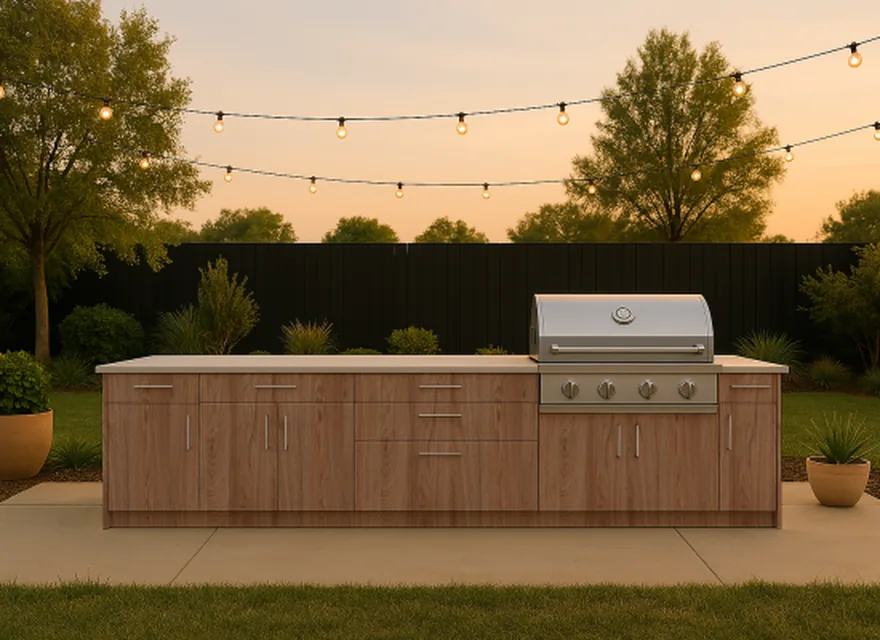
The cabinet program should support the appliance package, finish posture, and outdoor conditions instead of forcing the patio around a generic box layout.
The exact cabinet direction should be confirmed against current manufacturer specifications, appliance documents, and site conditions.
Manufacturer specifications indicate phenolic core direction for base cabinet applications, high-performance outdoor and wet-area material direction, durable surface construction, and easy-clean surface direction for demanding environments.
Slab door styling and exterior components should be planned around outdoor performance. Finish samples, UV behavior, and color performance should be reviewed through manufacturer specifications before final approval.
An outdoor hardware program may include soft-close drawer and hinge direction where available, stainless hardware direction, and adjustable leg levelers for uneven outdoor surfaces.
Trash pull-out, propane tank pull-out, sink base, grill base, side burner base, toe kick, filler, and end panel planning should be coordinated before order release.
Air vent grille placement matters. Grill bases must coordinate with appliance specifications, insulation jacket planning, proper airflow, and heat management.
Cabinet finish, slab direction, countertop support, hardware, and adjacent exterior materials should be reviewed together so the outdoor kitchen feels connected to the home.
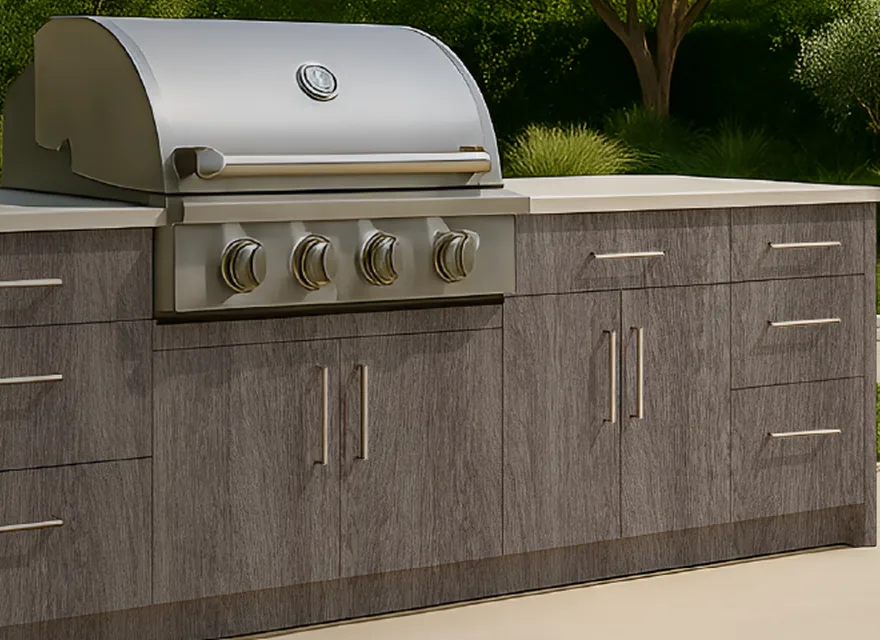
The best outdoor kitchen decisions usually happen before the final appliance and cabinet order, not after the patio is already locked in.
Tell us where the outdoor kitchen will live, how it will be used, and which appliances need to be planned around. We will help shape the next conversation before the project gets expensive to change.