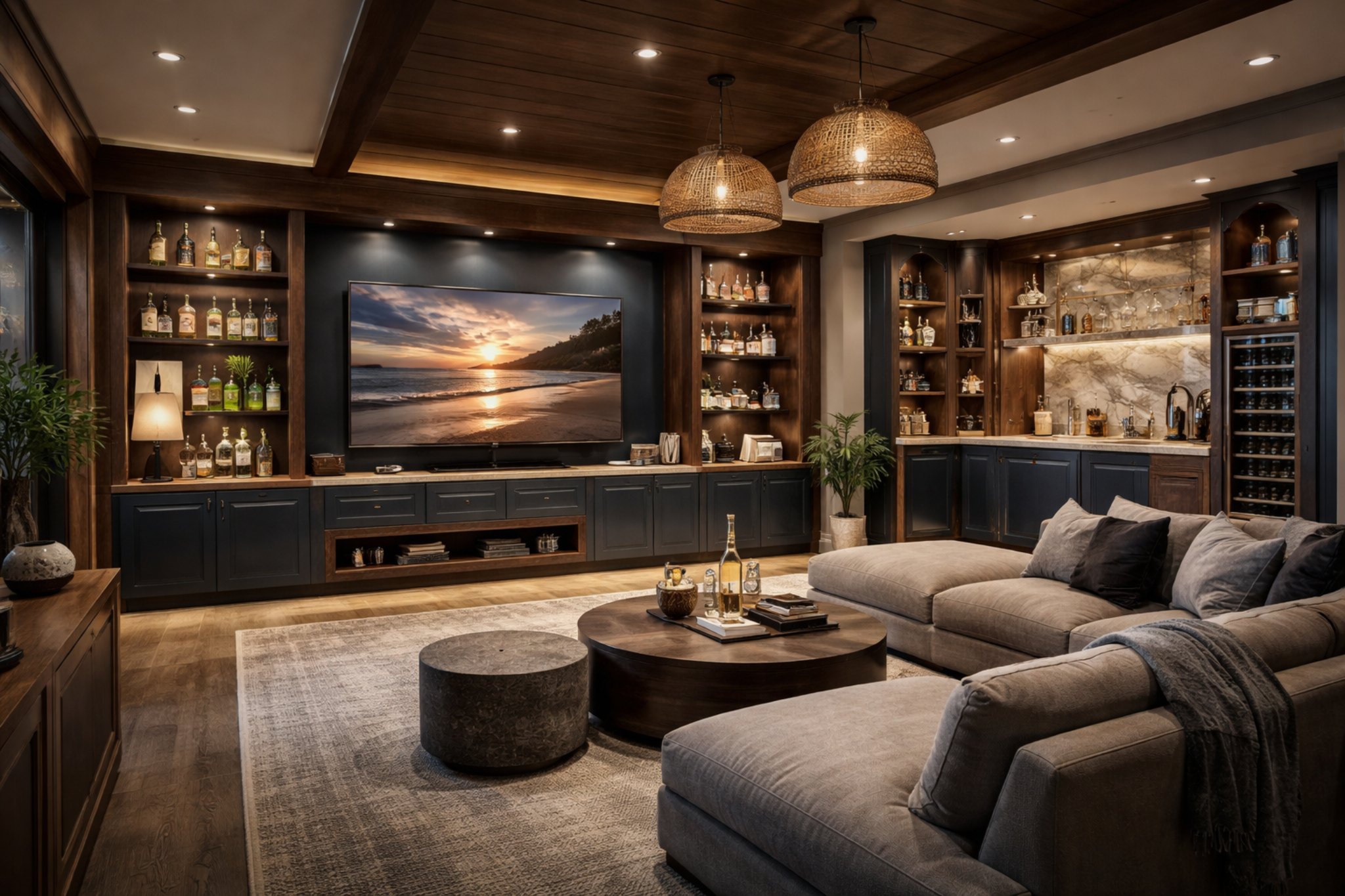
Use the image as a planning reference
Study the proportion, finish weight, storage visibility, lighting, and how the cabinetry connects to the surrounding room.
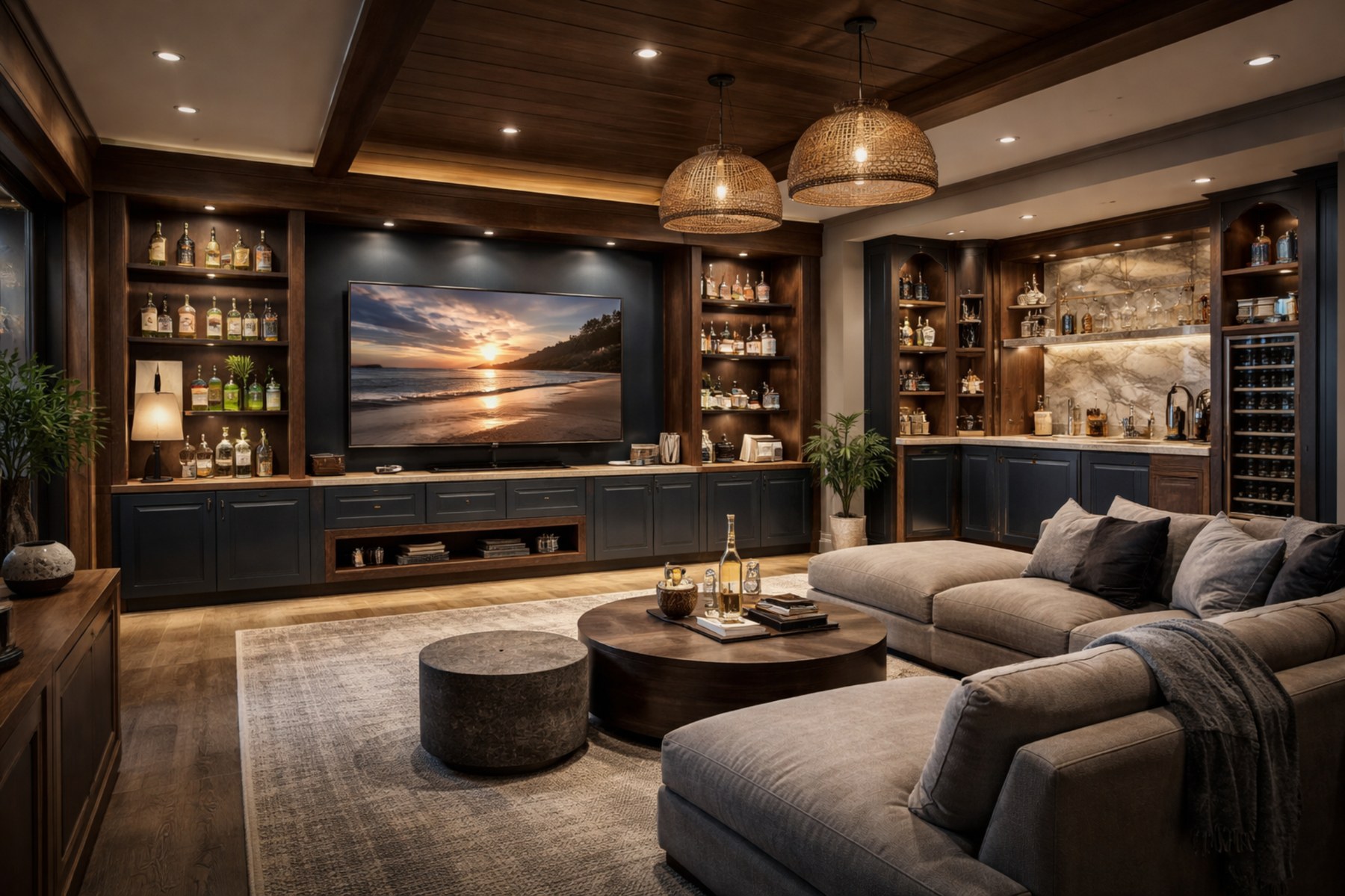
A media lounge, game room, or man cave can carry stronger personality, but the best versions still rely on proportion, lighting, storage, beverage planning, acoustic comfort, and durable materials.
Each space needs a different planning posture. The goal is to solve function, proportion, finish direction, storage behavior, and installation risk before the room becomes a set of disconnected selections.
Dark finishes, metal, stone, wood, glass, and lighting should create atmosphere without becoming gimmicky or hard to maintain.
Seating, screens, speakers, gaming, bar storage, refrigeration, and display all need practical planning before decorative choices take over.
High-use lounge spaces need finishes, countertops, hardware, and storage that can handle drinks, traffic, and frequent use.
These are the details that typically shape cost, lead time, storage quality, and how finished the room feels after installation.
Study the proportion, finish weight, storage visibility, lighting, and how the cabinetry connects to the surrounding room.
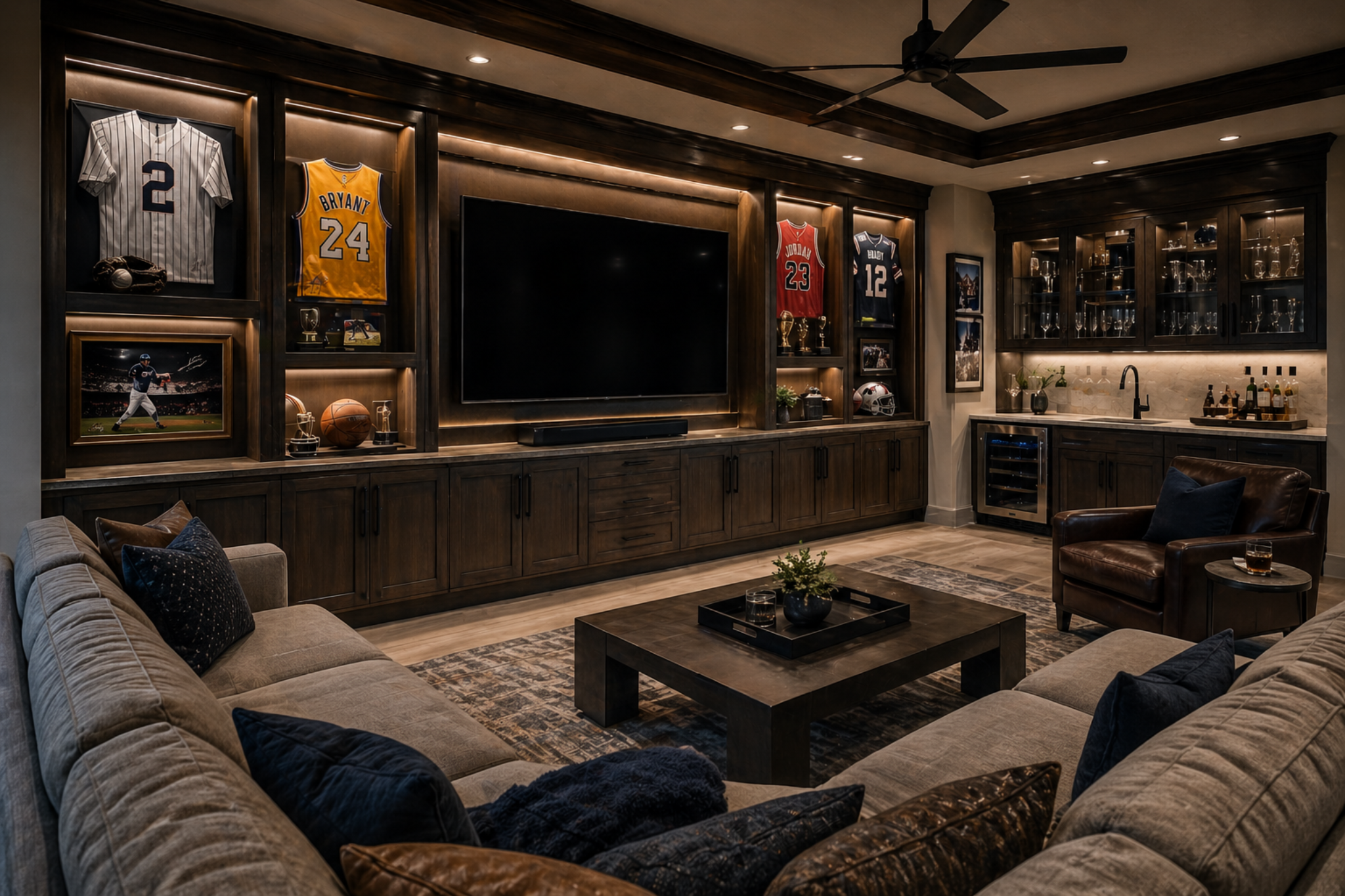
The space should support the rest of the home through material tone, architectural rhythm, and a level of function that feels intentional.
Start with what the space needs to solve, then shape the cabinetry, storage, materials, and details around that purpose.