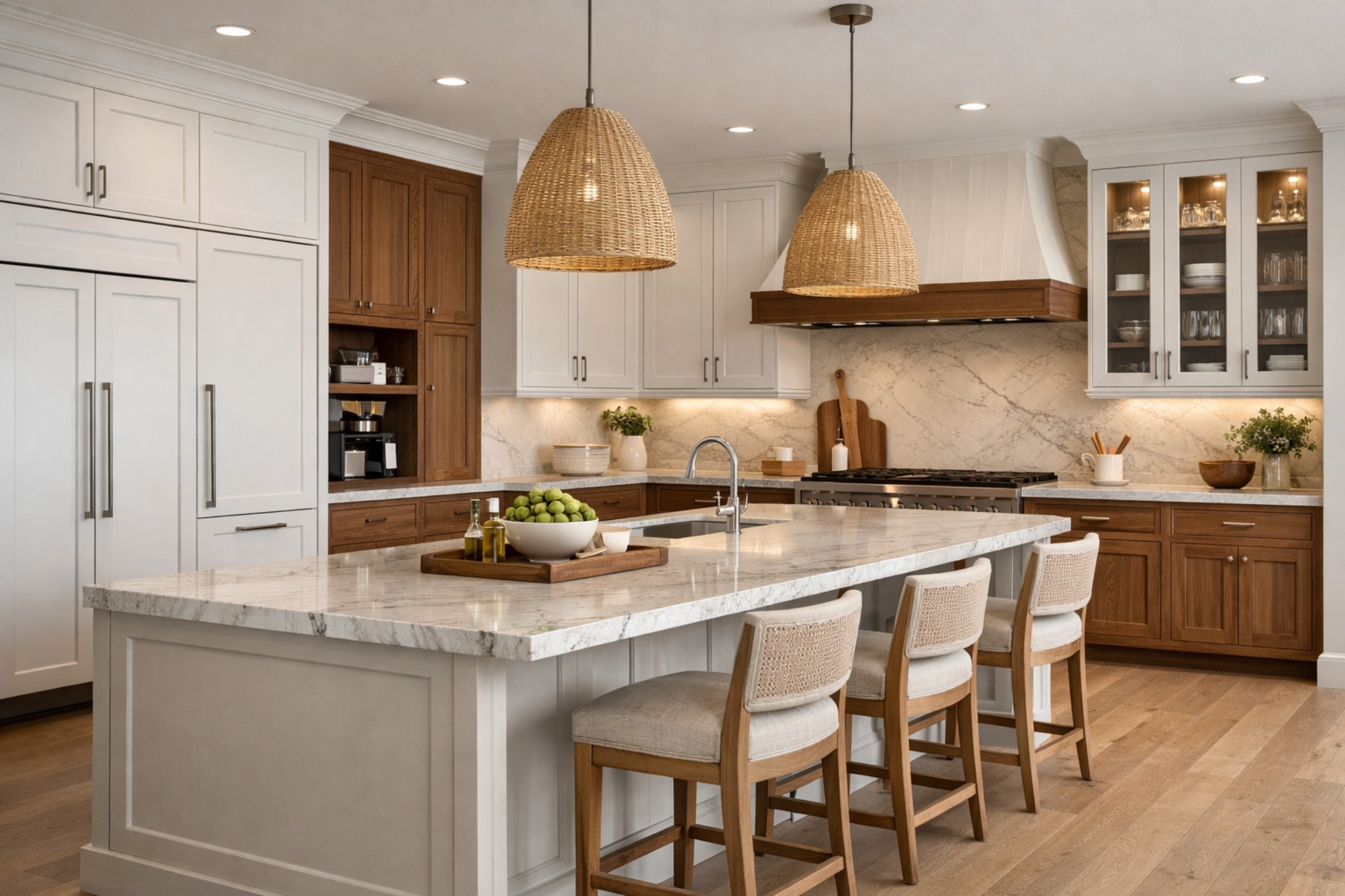
Use the image as a planning reference
Study the proportion, finish weight, storage visibility, lighting, and how the cabinetry connects to the surrounding room.
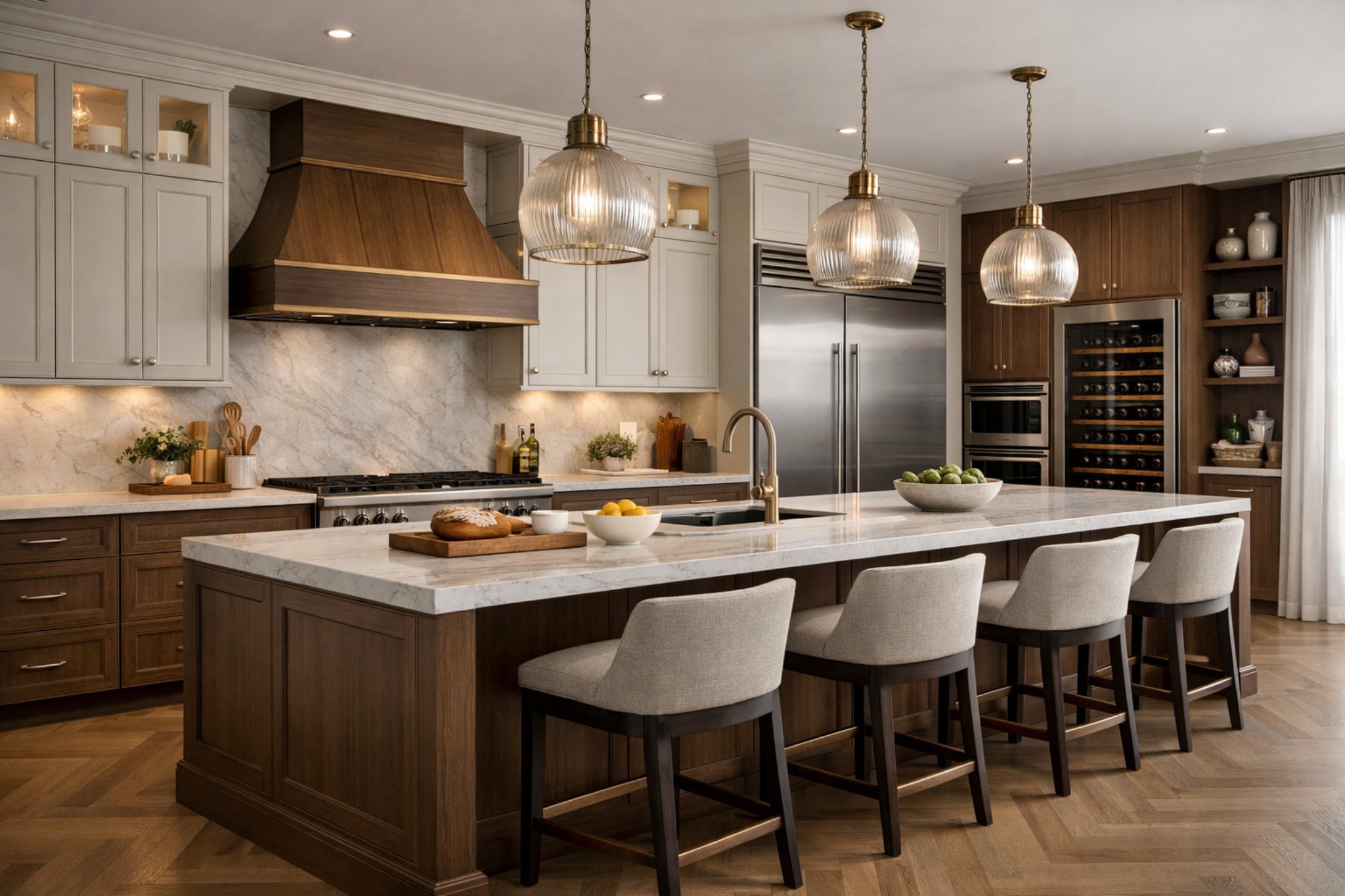
A successful kitchen is not only a cabinet layout. It is a daily-use operating system that has to coordinate storage, cooking, cleanup, appliance flow, material durability, and the architectural tone of the home.
Each space needs a different planning posture. The goal is to solve function, proportion, finish direction, storage behavior, and installation risk before the room becomes a set of disconnected selections.
The cabinet plan should support clear working zones, appliance access, landing space, circulation, and sightlines before door style or color takes over.
Drawers, trays, roll-outs, pantry zones, waste systems, and appliance storage should be placed according to real use patterns, not simply wherever a cabinet happens to fit.
Countertops, backsplash, cabinet finish, decorative hardware, lighting, and hood direction need to feel intentional together rather than selected in isolation.
These are the details that typically shape cost, lead time, storage quality, and how finished the room feels after installation.
Study the proportion, finish weight, storage visibility, lighting, and how the cabinetry connects to the surrounding room.
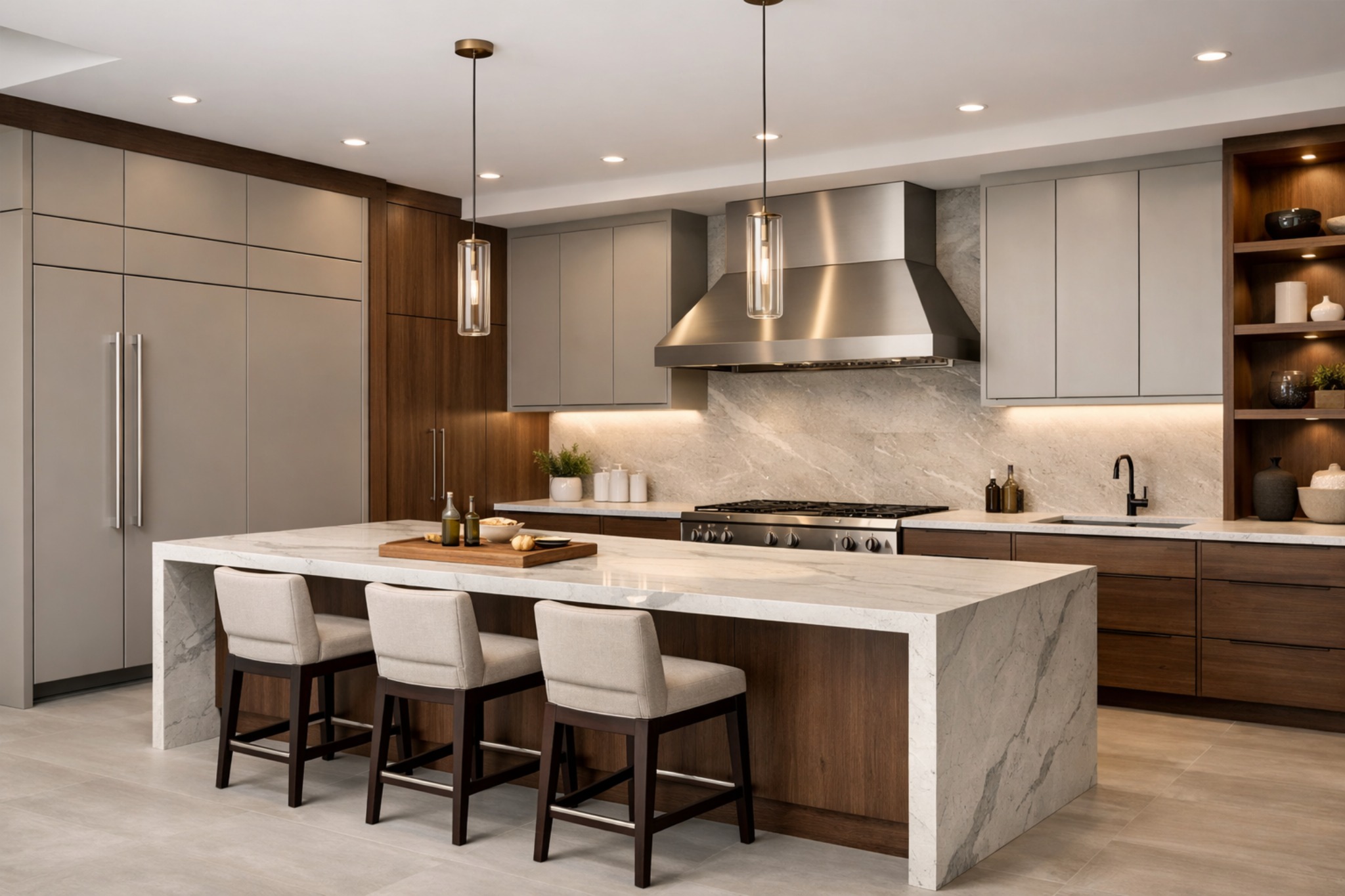
The space should support the rest of the home through material tone, architectural rhythm, and a level of function that feels intentional.
Use the Emerald Coast / Northwest Florida and Southwest Florida market pages for local context, or browse the Design Gallery for room direction before starting the intake.
Start with what the space needs to solve, then shape the cabinetry, storage, materials, and details around that purpose.