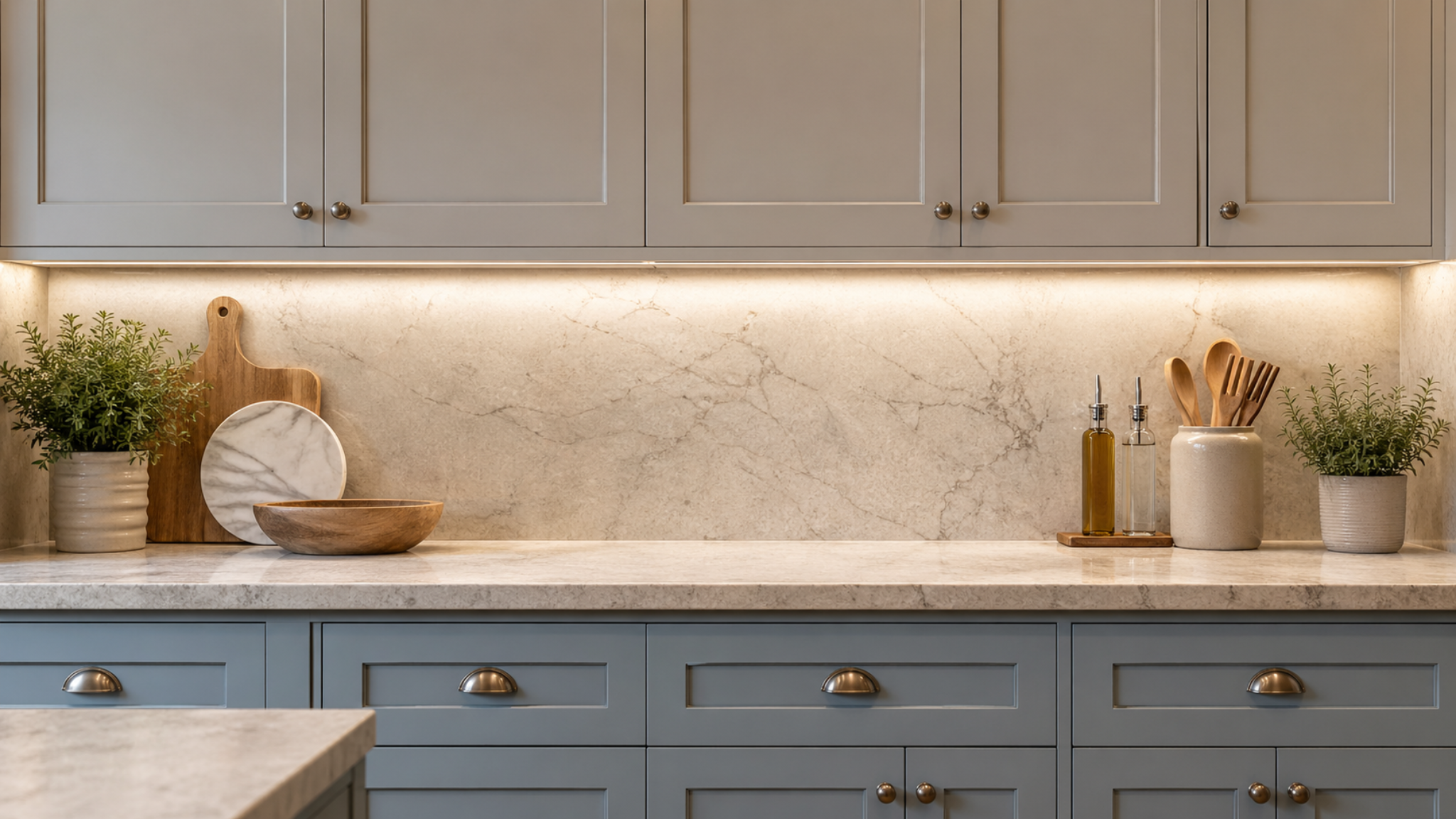
Under-Cabinet Task Lighting
Task lighting brightens countertop work zones for prep, cleanup, coffee, serving, and daily use. It should be even, diffused, and placed to reduce shadows instead of creating glare.
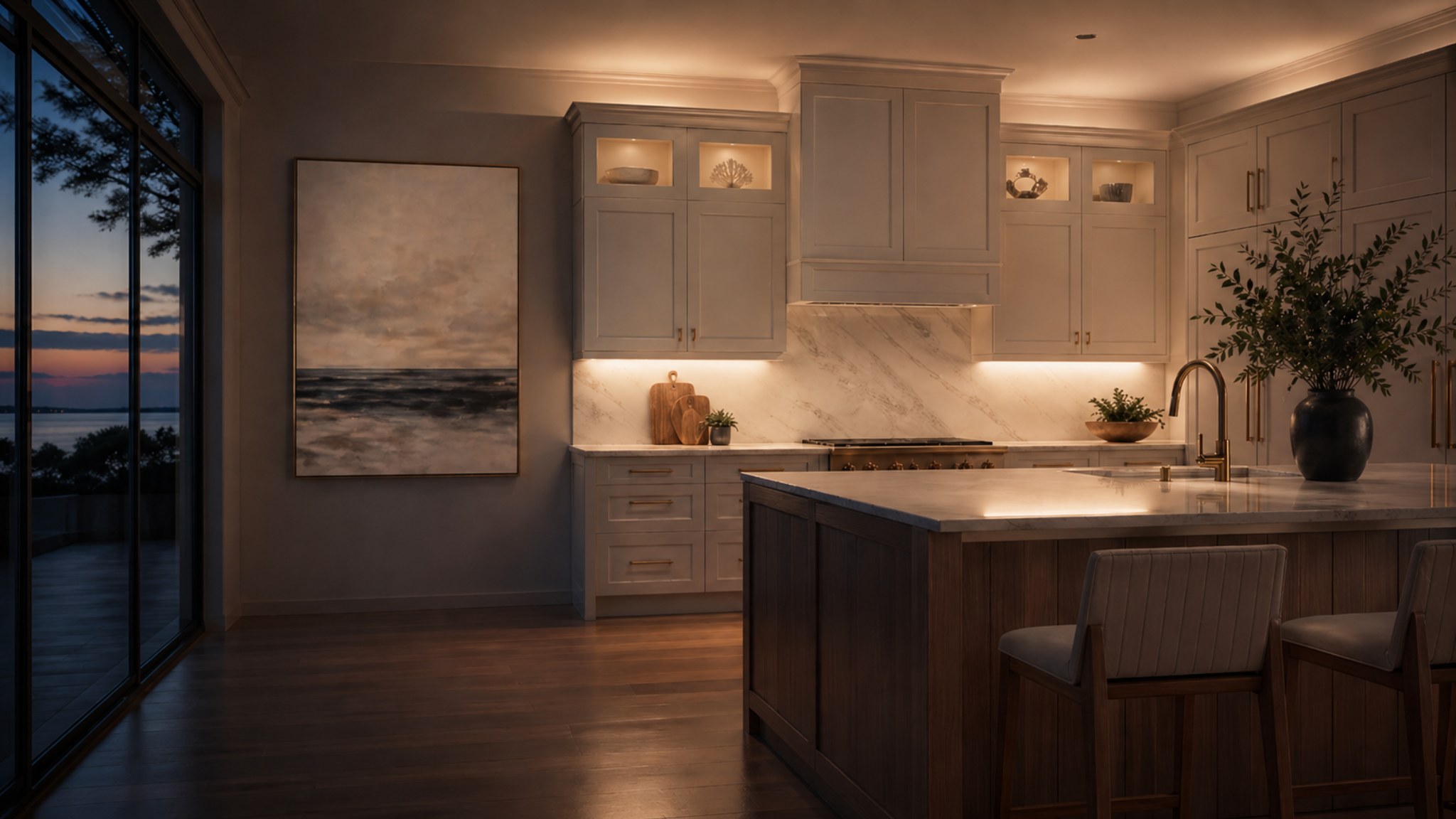
Integrated lighting is not just decoration. It supports task work, display, safety, ambience, color balance, and the way cabinetry, countertops, shelves, and finished interiors are experienced every day.
Cabinet lighting affects countertop visibility, display cabinetry, floating shelves, drawer access, toe-space safety, evening ambience, electrical planning, dimming zones, and how cabinet finishes read under warm or cool light. The strongest result comes from selecting the lighting purpose first, then confirming color temperature, location, power, switching, service access, and installation responsibility.
Lighting improves the room when it makes daily work easier, highlights finished interiors, softens the space at night, and turns cabinetry into a more complete architectural system.
Cost moves with linear footage, cabinet width, panel type, power supplies, receivers, dimmers, switching, factory preparation, jobsite installation, and whether the lighting is surface-mounted, recessed, or flush-integrated.
The biggest misses are late electrical planning, visible wires, wrong color temperature, uneven light, missing dimming control, glare, no service access, and lighting that conflicts with cabinet construction or moulding details.
Lighting systems need clean lenses, accessible power components, protected wiring, correct transformer capacity, and qualified electrical coordination so the system remains serviceable after the room is finished.
Each type solves a different problem. A good plan can combine several lighting types, but each one should have a clear purpose, a clean power path, and a clear understanding of what must be coordinated before cabinetry, stone, electrical, and installation are released.
Task lighting brightens countertop work zones for prep, cleanup, coffee, serving, and daily use. It should be even, diffused, and placed to reduce shadows instead of creating glare.
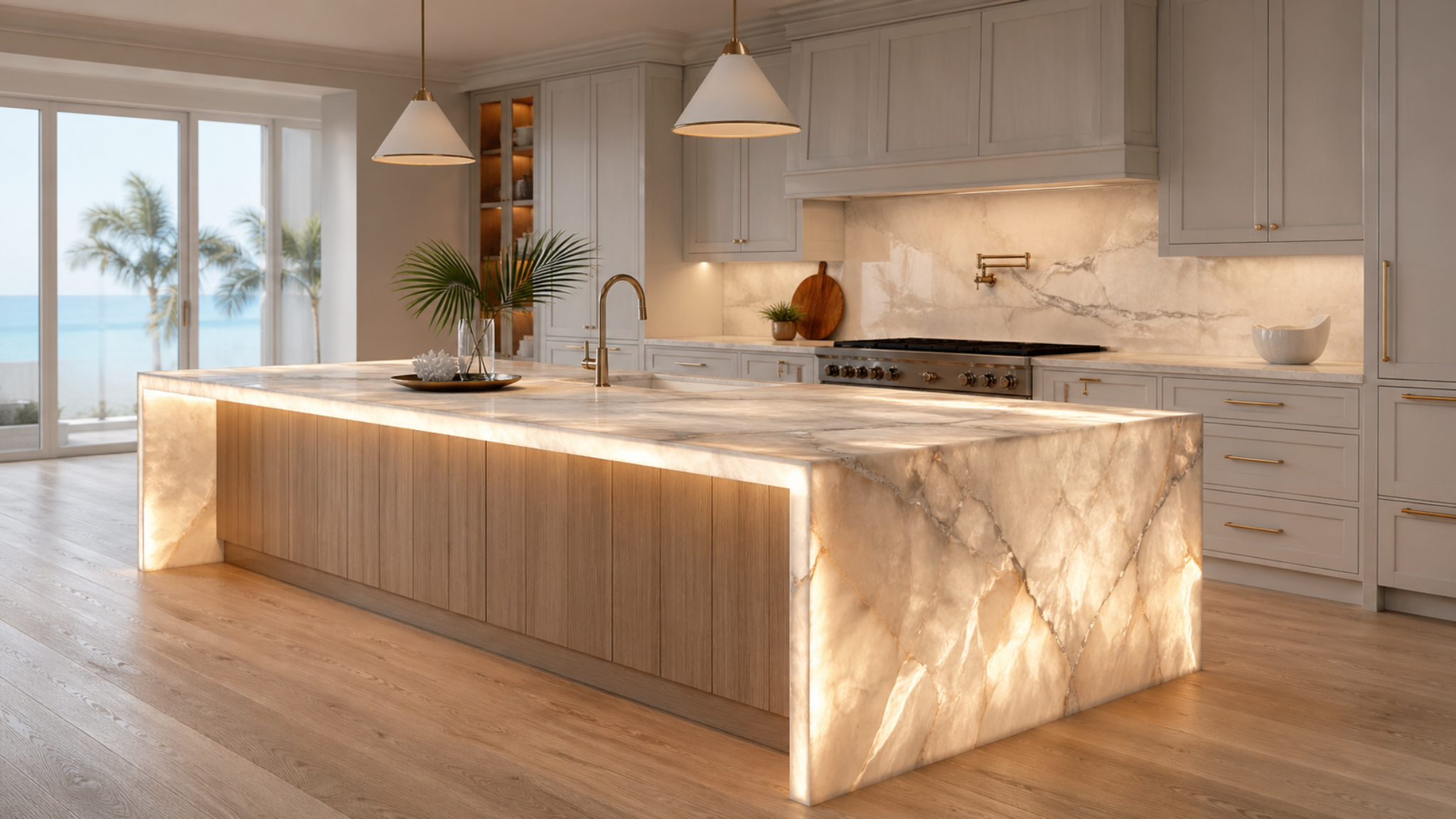
Back-lit stone and translucent countertop features create a dramatic architectural effect. They require early coordination between stone selection, cabinetry, lighting, power, access, support, and installation.
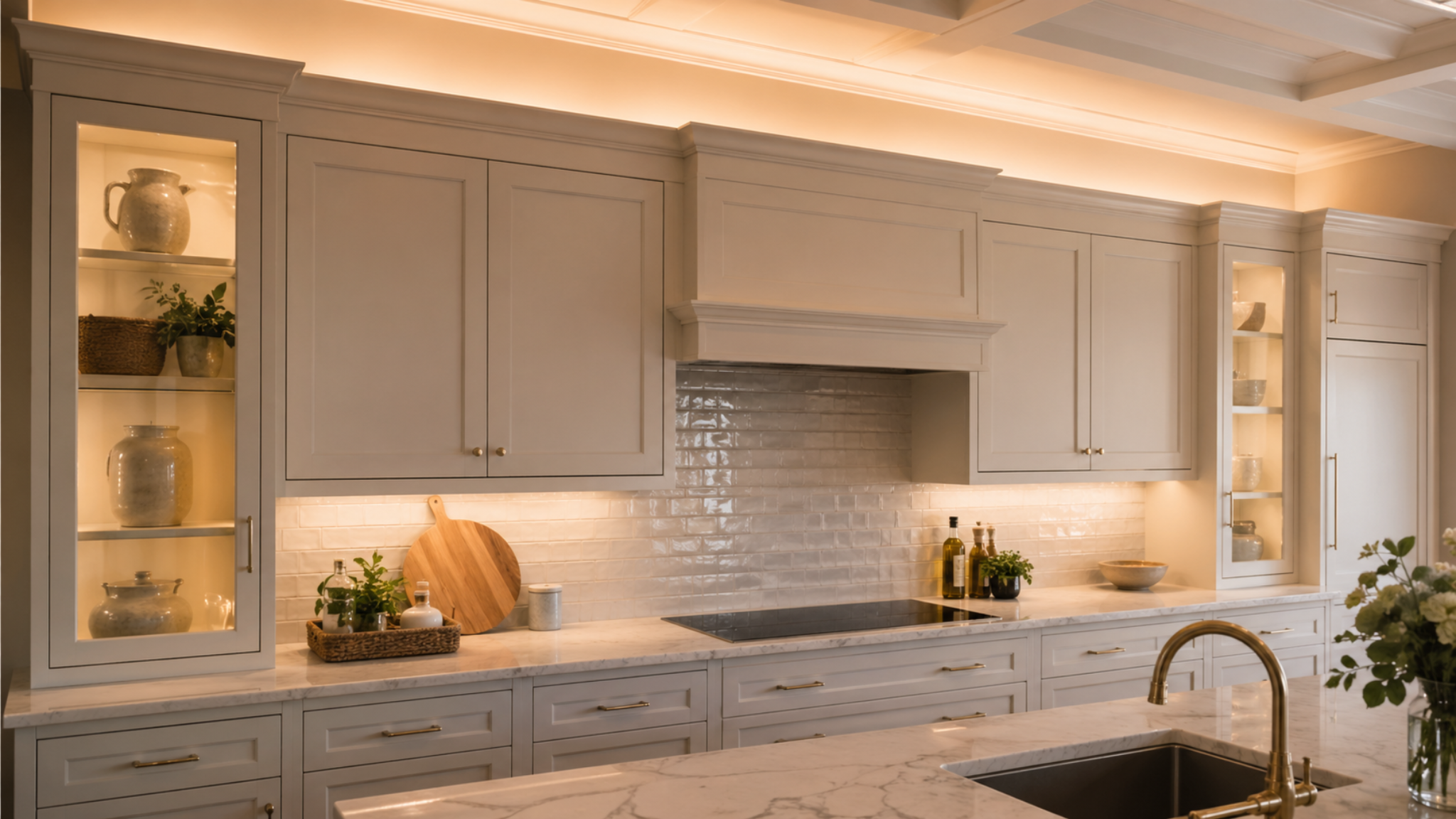
Up-lighting creates soft ambient light when cabinets are set down from the ceiling. It works best when crown, fascia, or moulding returns conceal the lighting hardware.
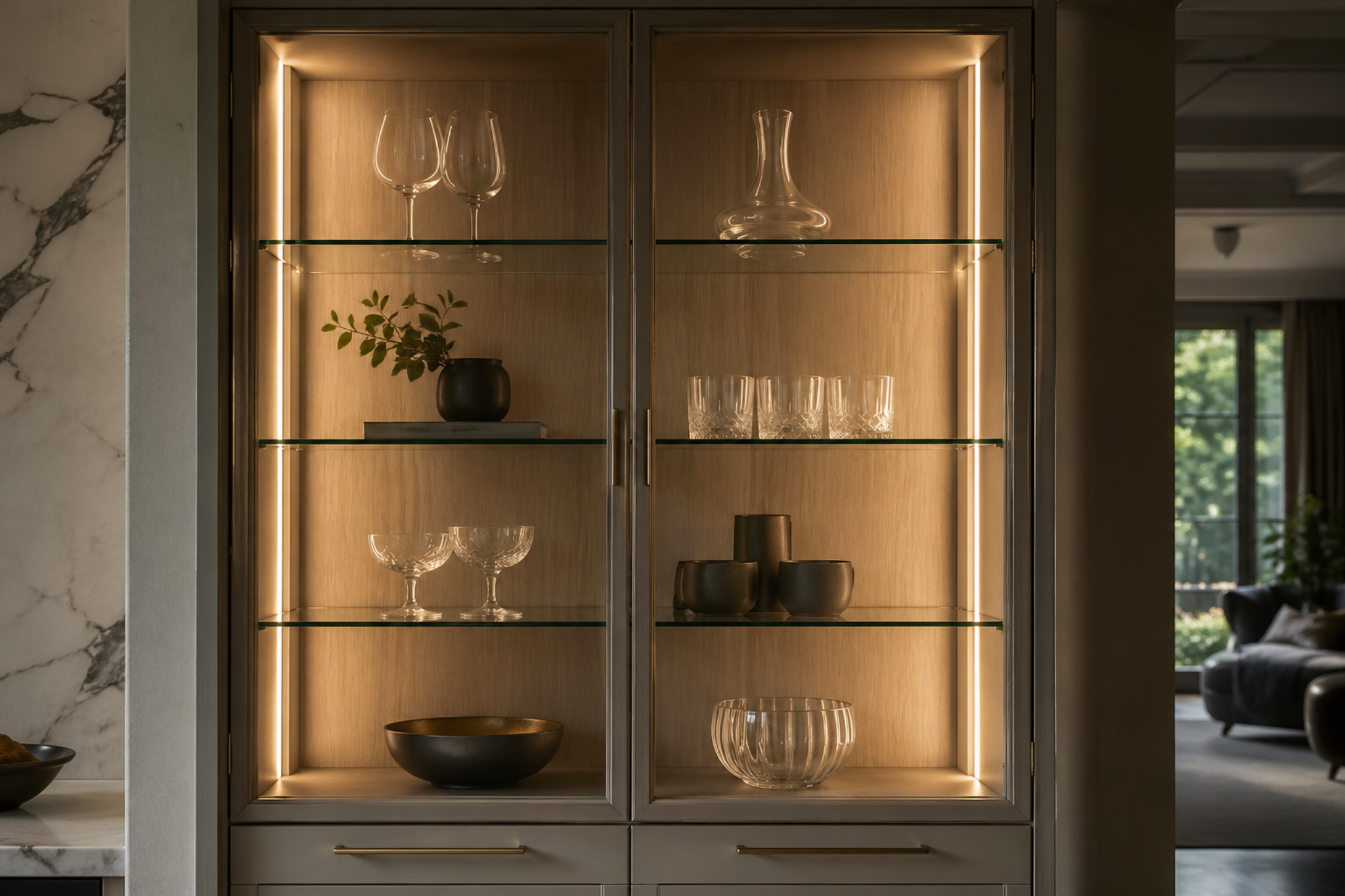
Interior lighting improves display cabinets, bar cabinets, pantry visibility, and tall storage. Vertical lighting helps contents read evenly from top to bottom.
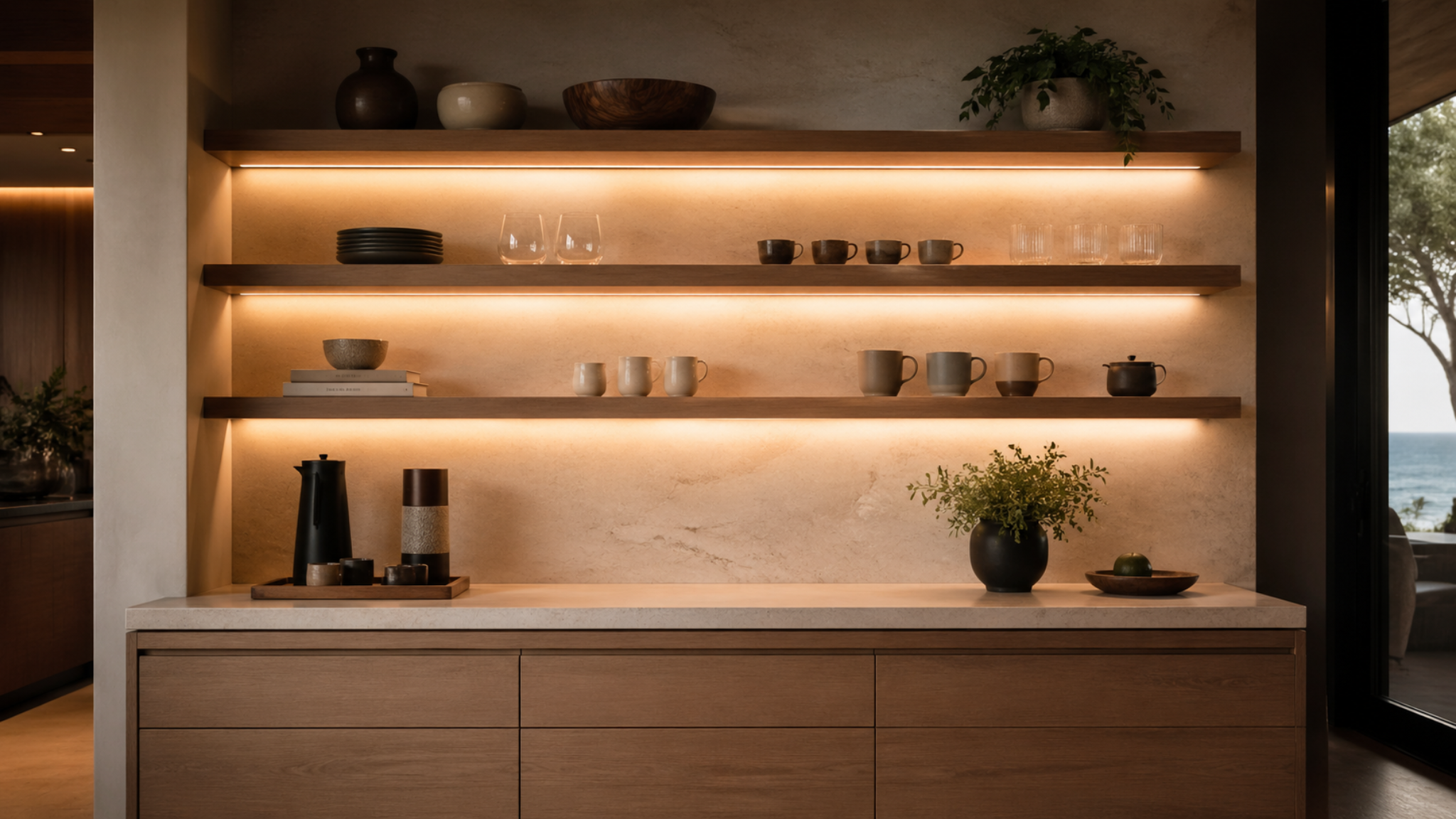
Integrated shelf lighting adds a warm architectural layer to bars, coffee stations, display walls, and open shelving while keeping the light source visually quiet.
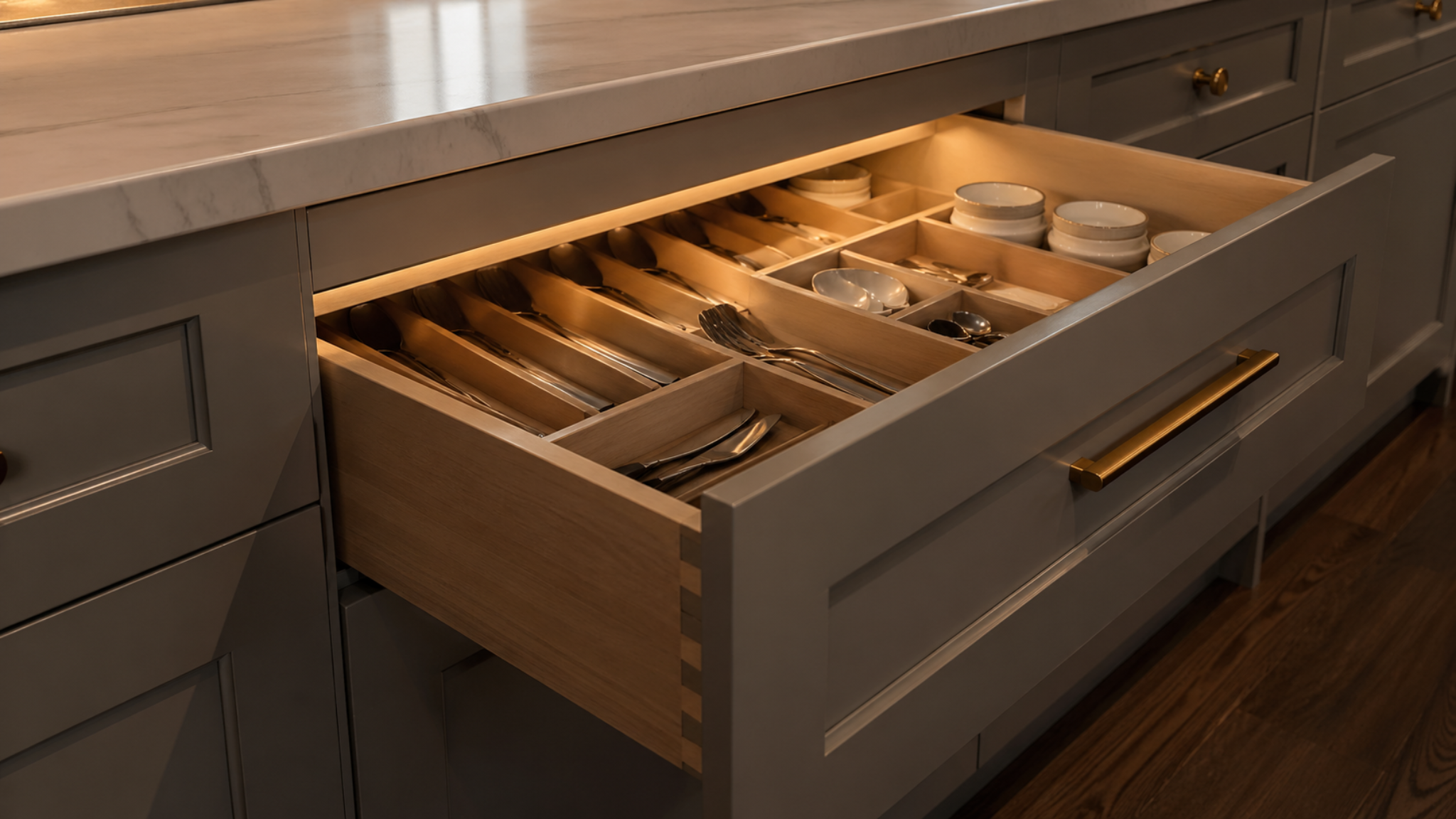
Drawer lighting can make utensils, specialty storage, and deep drawers easier to use. It is strongest when the lighting is hidden and the drawer contents remain the focus.
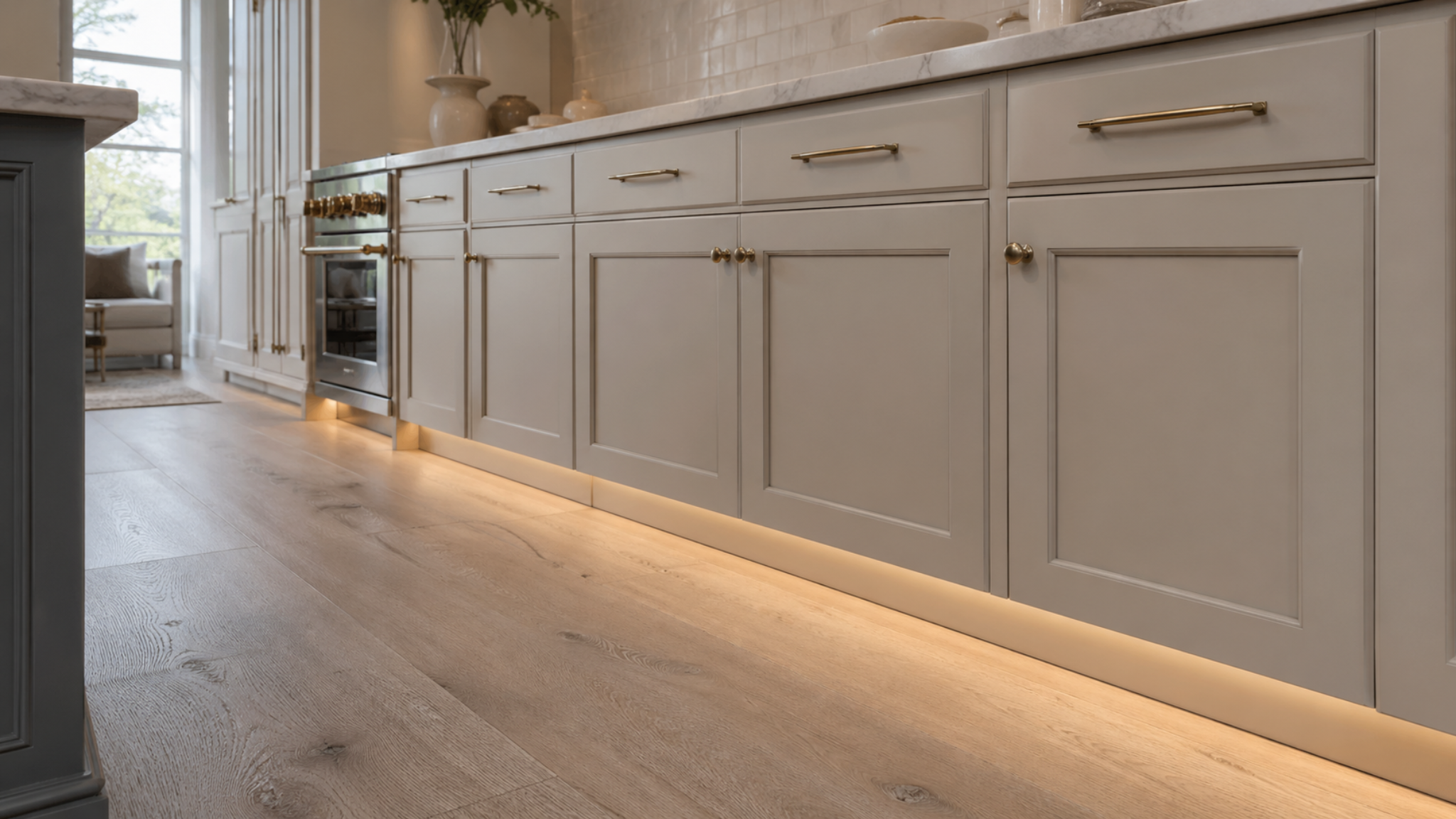
Toe-space lighting can provide soft night lighting, wayfinding, and a floating cabinet effect. It should be restrained and architectural, not bright or theatrical.
A back-lit countertop, waterfall island, bar top, backsplash panel, or feature stone can turn the material itself into the light source. The effect is strongest when the stone has natural translucency, the lighting is diffused evenly, and the surrounding cabinetry is calm enough to let the feature lead.
This type of lighting needs more coordination than ordinary under-cabinet lighting. The stone, substrate, cabinet support, transformer location, wire path, service access, dimming control, heat management, and installation sequence all need to be planned before the material is ordered or fabricated.
Back-lit stone works best as a deliberate focal point: an island waterfall, bar feature, floating counter, backsplash panel, or specialty hospitality-style detail. It should feel architectural, not flashy.
Not every slab is suitable for back-lighting. Translucency, veining, thickness, resin fill, seams, edge details, and slab consistency should be reviewed with the fabricator before commitment.
The lighting should be continuous, warm, and diffused. Visible LED dots, uneven bright spots, hard shadows, and exposed wiring weaken the entire feature.
Power supplies, controls, and lighting components should remain serviceable after install. A sealed-in lighting system can become expensive to repair later.
A lighting plan should begin with purpose: task, display, ambient, utility, accent, safety, or mood. Under-cabinet lighting is normally about work surfaces. Interior lighting is about visibility and display. Up-lighting is about ambience. Toe-space lighting is about low-level wayfinding and the feeling of lift. Drawer lighting is about access. Shelf lighting is about texture and atmosphere. Back-lit countertops are about controlled architectural drama and should be treated as a specialty feature.
Once the purpose is clear, the design can confirm where the light sits, how it is concealed, how it is controlled, and how it will be serviced later. That sequence protects the finished room from visible wiring, mismatched color temperature, glare, and late field improvisation.
Warm light feels calmer and more residential. Warm-neutral light is often stronger for task areas. Cooler light can help in highly functional areas with light-colored finishes, but it can also feel harsh if used without restraint.
Best for accent lighting, display cabinets, evening ambience, bars, floating shelves, and spaces where the goal is warmth and atmosphere.
Best for under-cabinet task lighting over countertops because it offers a cleaner working light while still feeling appropriate in a residential kitchen.
Best reserved for functional lighting needs or light-colored work areas where clarity is more important than warmth. It should be selected carefully so the room does not feel clinical.
A premium lighting plan should make the cabinetry easier to use and more resolved visually. Under-cabinet lighting can change how the client cooks and cleans. Interior lighting can make display cabinets and tall storage feel intentional. Up-lighting can soften the whole room at night. Drawer and toe-space lighting should be used selectively where they improve real use. Back-lit countertops should be used only where the feature earns its place visually and the technical planning is strong enough to support it.
The strongest results come from restraint, clean integration, dimming control, correct color temperature, and enough planning that the lighting feels built into the cabinetry instead of added onto it.
Late lighting decisions create avoidable field problems. The plan should confirm lighting type, color temperature, locations, controls, power supply capacity, outlet location, wire path, and which trade owns each step.
Identify which areas need task lighting, display lighting, ambient lighting, shelf lighting, drawer lighting, toe-space lighting, back-lit countertop features, or no lighting at all.
Review framed or frameless construction, recessed bottoms, light rail, valance, crown, shelf thickness, glass doors, interior ends, translucent stone conditions, and finished panel needs.
Select warm, warm-neutral, or cool light based on the task, finish palette, countertop material, and desired mood.
Coordinate power supplies, receivers, connectors, dimmers, switches, outlets, and service access so the system can be installed and maintained cleanly.
Plan how wires move between cabinets, panels, shelves, and power locations. Clean lighting depends on hidden routing and correct preparation.
Clarify what is factory-prepared, what is shipped loose, what the installer mounts, and what a qualified electrician must connect or verify.
A finished cabinet lighting system may look simple, but it depends on power capacity, connector locations, switching strategy, dimming control, wire routing, panel preparation, light concealment, countertop or panel support where applicable, and access for future service. The visible light should feel calm; the hidden planning should be exact.
Electrical work should be performed or verified by a qualified electrician, and all local code, manufacturer instructions, and site conditions should be followed. Cabinet lighting should never be treated as a casual field add-on when power, heat, serviceability, and finished cabinetry are involved.
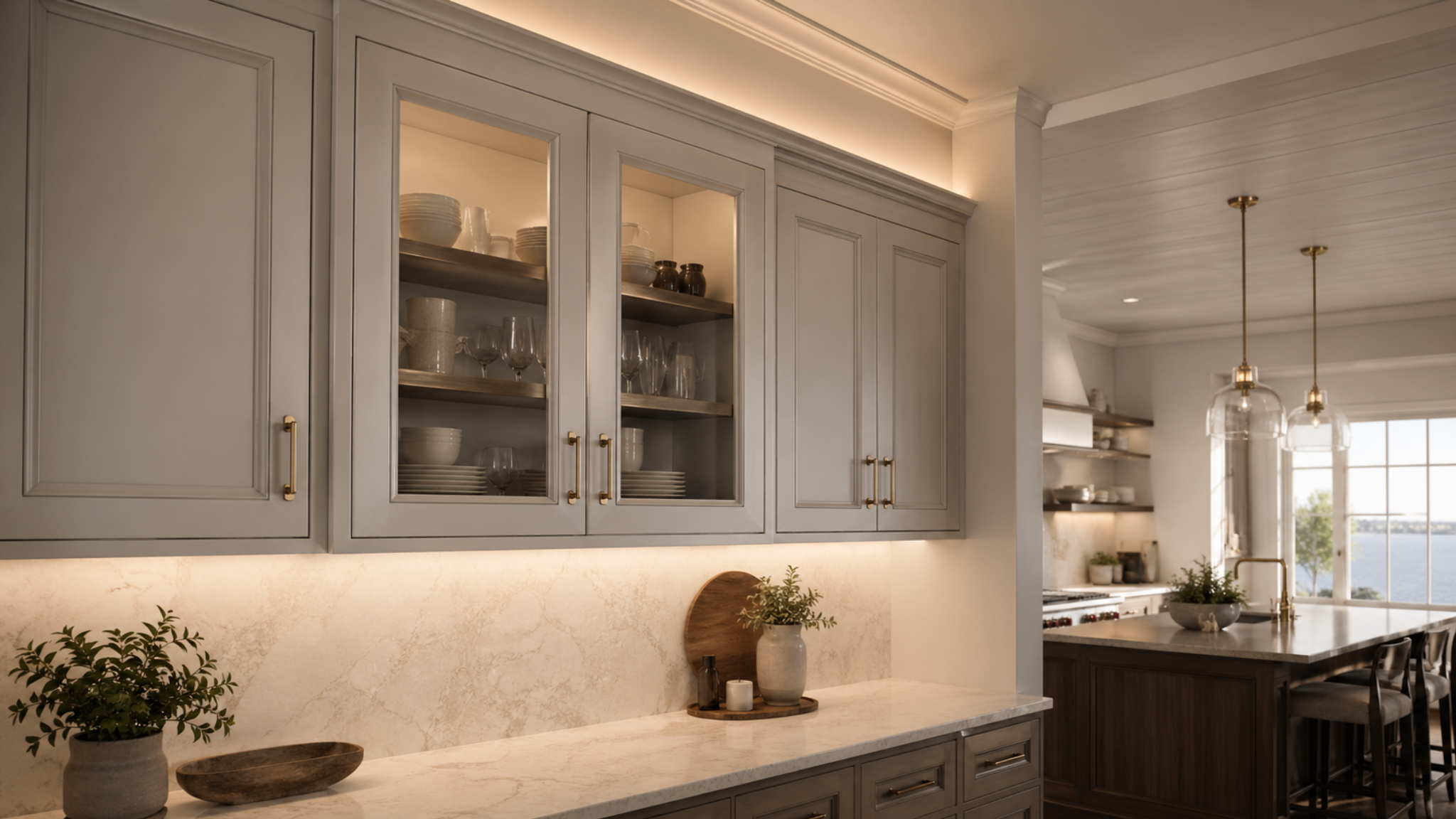
Power, controls, wiring, dimming, service access, cabinet construction, and light concealment decide whether the finished system feels premium.
Diffusers, glass shelves, display interiors, and toe spaces collect dust and residue over time. They should be cleaned gently with non-abrasive methods appropriate for the surrounding cabinetry and finish. Power supplies, receivers, connectors, switches, and sensors should remain accessible enough for service without damaging finished cabinetry.
The client should know which lighting is dimmable, which lighting is door- or drawer-activated, which components are hidden above or below cabinets, and who to contact if a light run, switch, or receiver needs adjustment after installation.
The right lighting plan makes the room easier to use, more finished at night, and more intentional as a complete cabinet system. The best result comes from coordinating lighting, cabinetry, electrical, installation, and finish expectations early.