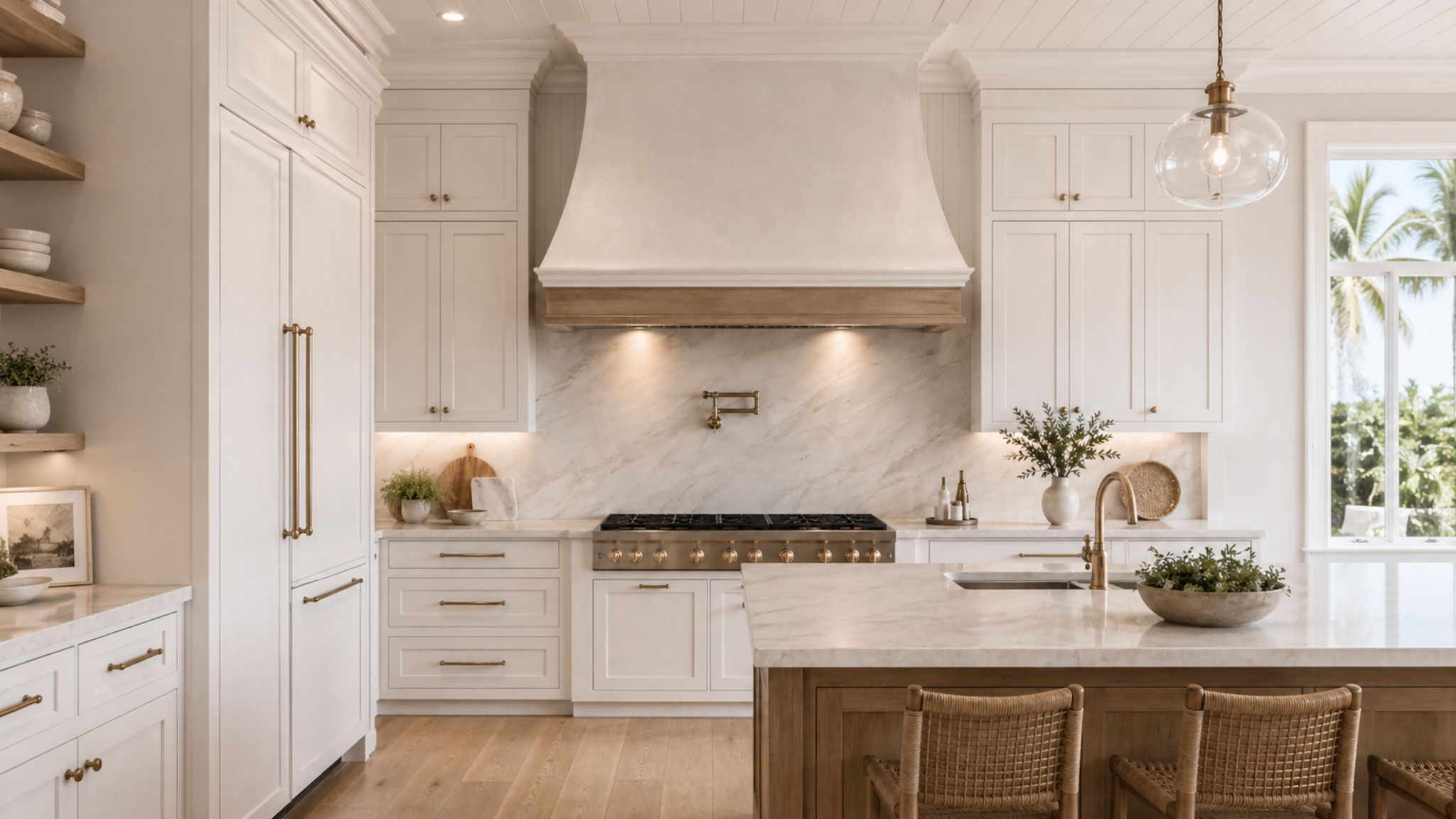
Use the image as a planning reference
Study the proportion, finish weight, storage visibility, lighting, and how the cabinetry connects to the surrounding room.
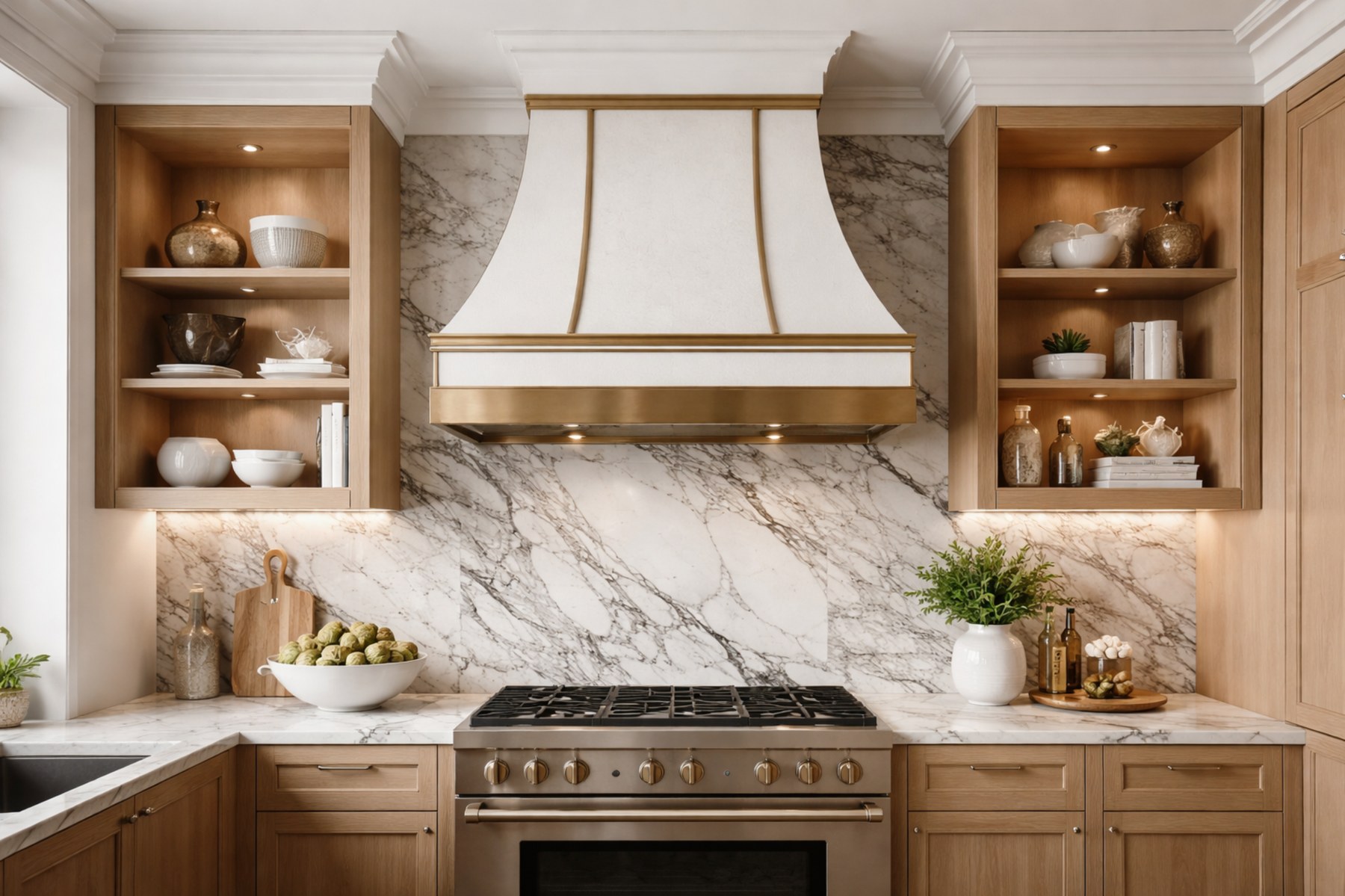
A custom hood is one of the strongest visual anchors in a kitchen, but it must also support ventilation, appliance clearance, code considerations, cleanup, finish behavior, and the scale of the cooking wall.
Each space needs a different planning posture. The goal is to solve function, proportion, finish direction, storage behavior, and installation risk before the room becomes a set of disconnected selections.
The hood should be sized to the range, ceiling height, adjacent cabinets, backsplash, and the level of formality in the room.
The decorative hood direction should be coordinated with the liner, blower, duct path, capture area, and appliance requirements.
Wood, painted, plaster-look, metal, and mixed-material hood directions each carry different maintenance, heat, grease, and style considerations.
These are the details that typically shape cost, lead time, storage quality, and how finished the room feels after installation.
Study the proportion, finish weight, storage visibility, lighting, and how the cabinetry connects to the surrounding room.
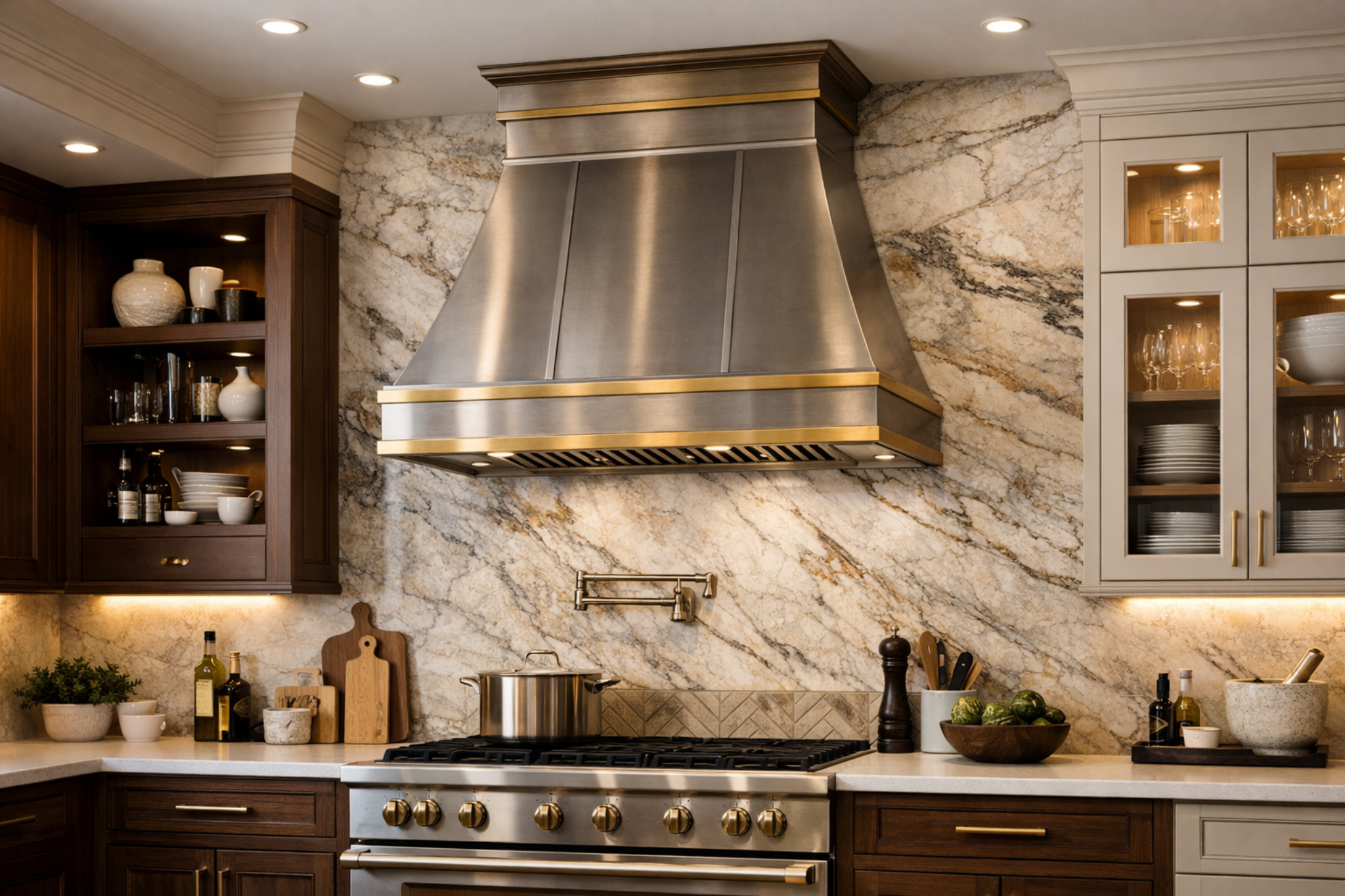
The space should support the rest of the home through material tone, architectural rhythm, and a level of function that feels intentional.
Start with what the space needs to solve, then shape the cabinetry, storage, materials, and details around that purpose.