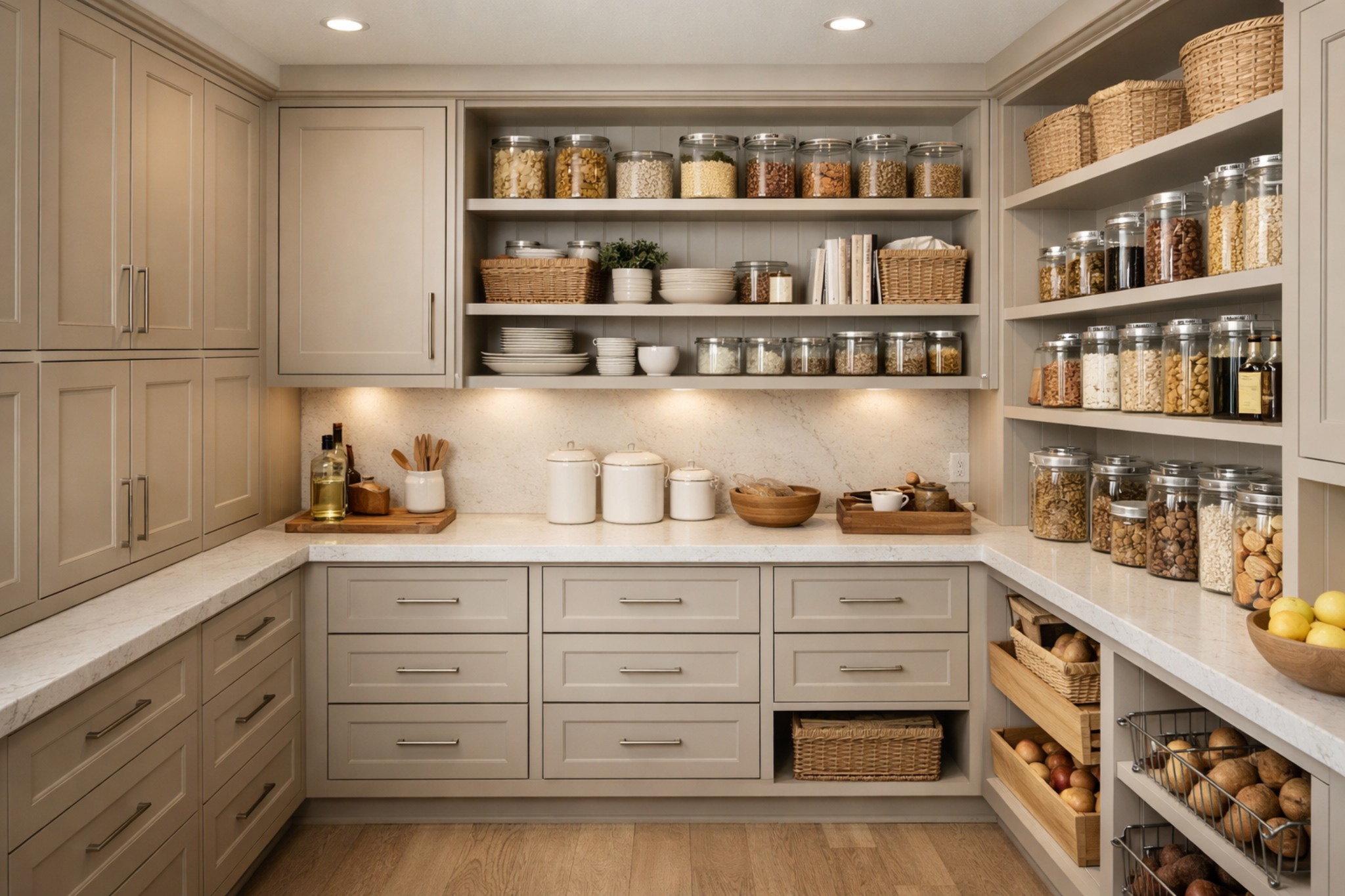
Use the image as a planning reference
Study the proportion, finish weight, storage visibility, lighting, and how the cabinetry connects to the surrounding room.
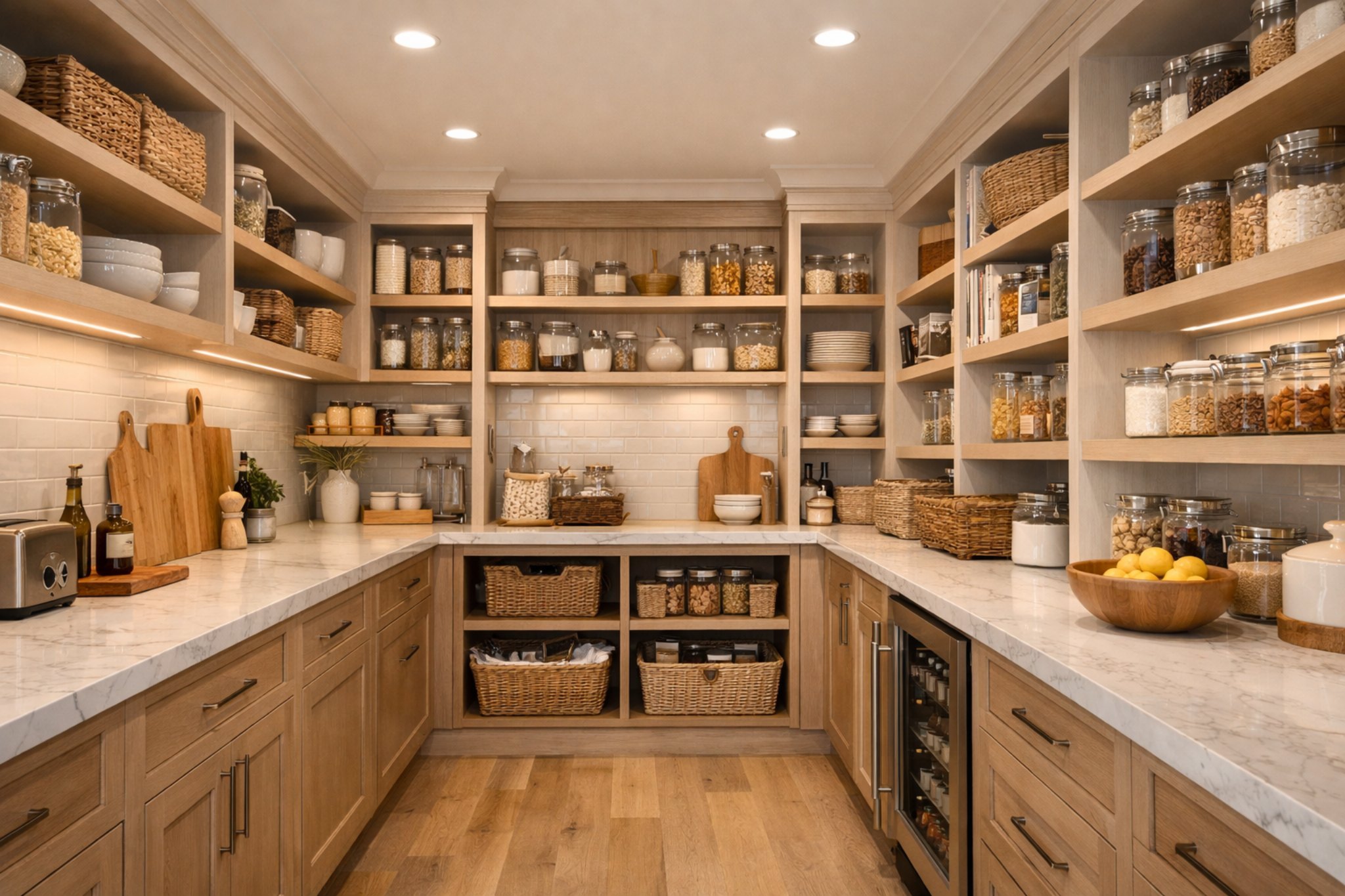
A pantry should not become a collection of leftover shelves. It should support food storage, countertop overflow, small appliances, serving pieces, coffee, cleanup, and daily household rhythm without competing with the main kitchen.
Each space needs a different planning posture. The goal is to solve function, proportion, finish direction, storage behavior, and installation risk before the room becomes a set of disconnected selections.
Shelf depth, drawer placement, pull-outs, tray storage, and tall storage should be matched to what the client actually stores.
When a pantry includes countertop, sink, coffee, or appliances, it needs the same discipline as a smaller kitchen.
Open shelving, glass doors, appliance garages, and concealed tall cabinets should be chosen based on how much display the client wants to maintain.
These are the details that typically shape cost, lead time, storage quality, and how finished the room feels after installation.
Study the proportion, finish weight, storage visibility, lighting, and how the cabinetry connects to the surrounding room.
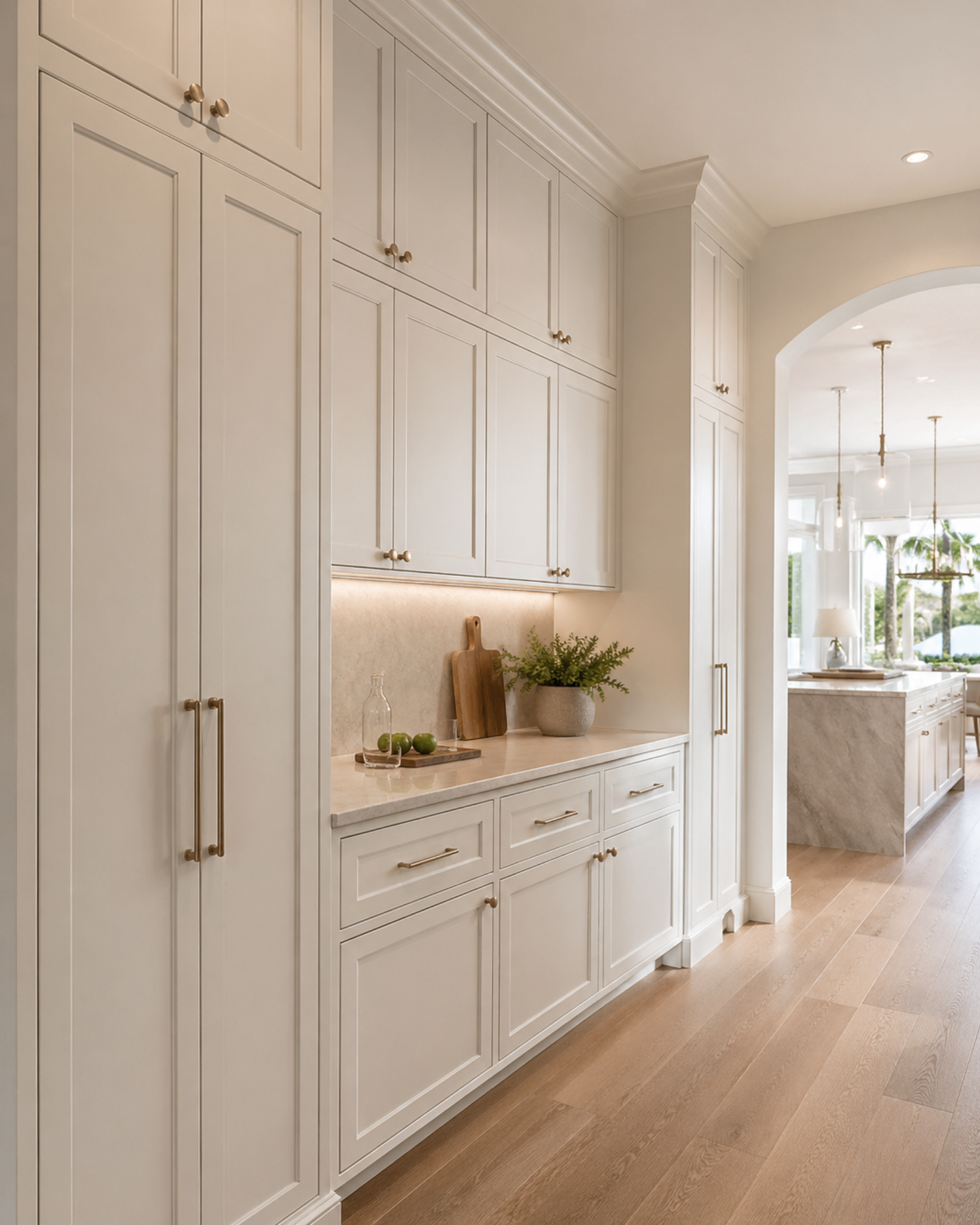
The space should support the rest of the home through material tone, architectural rhythm, and a level of function that feels intentional.
Compare the main Kitchen Design path, review service-market context for the Emerald Coast / Northwest Florida or Southwest Florida, then start the intake when the storage scope is ready to discuss.
Start with what the space needs to solve, then shape the cabinetry, storage, materials, and details around that purpose.