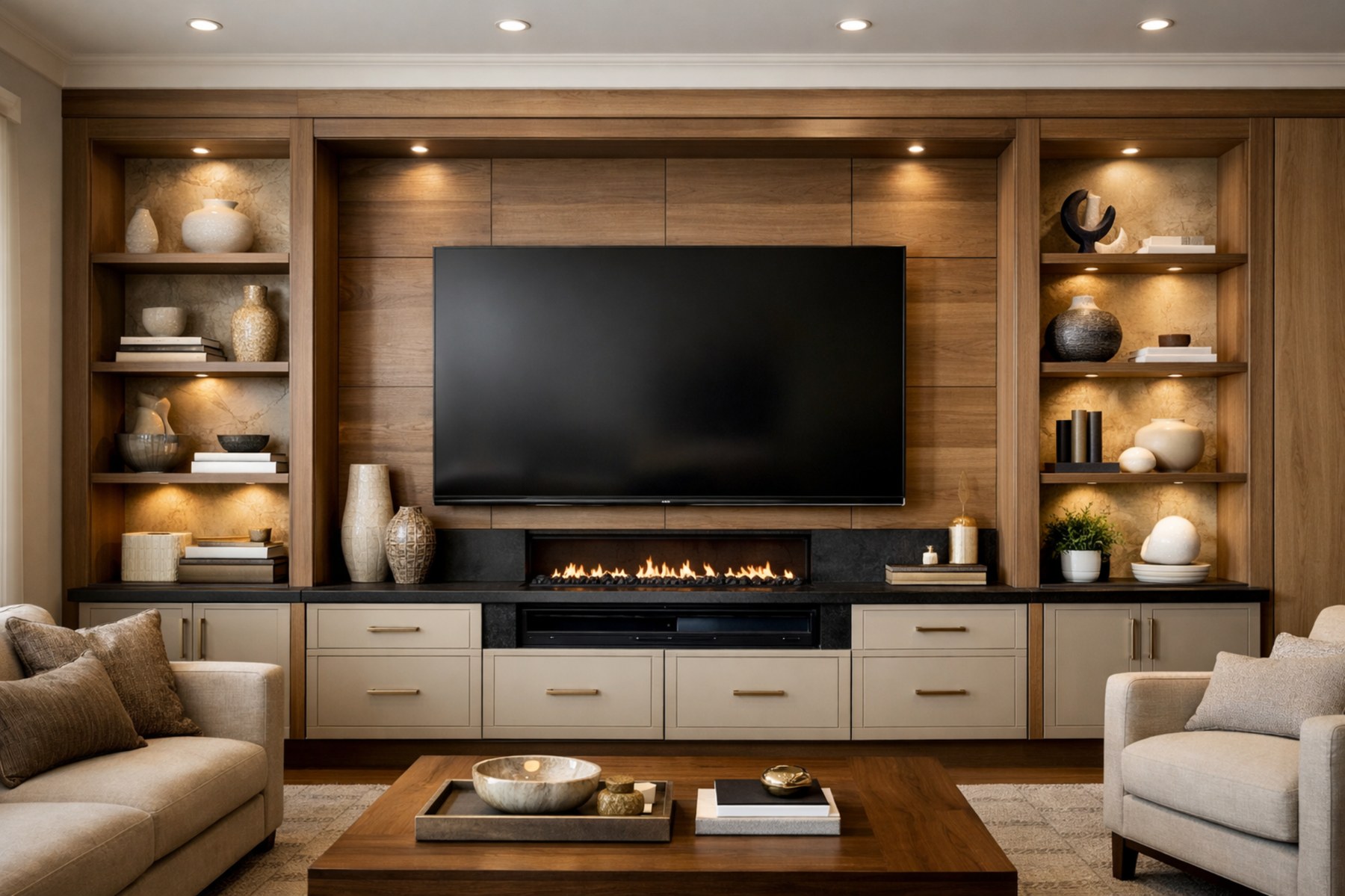
Use the image as a planning reference
Study the proportion, finish weight, storage visibility, lighting, and how the cabinetry connects to the surrounding room.
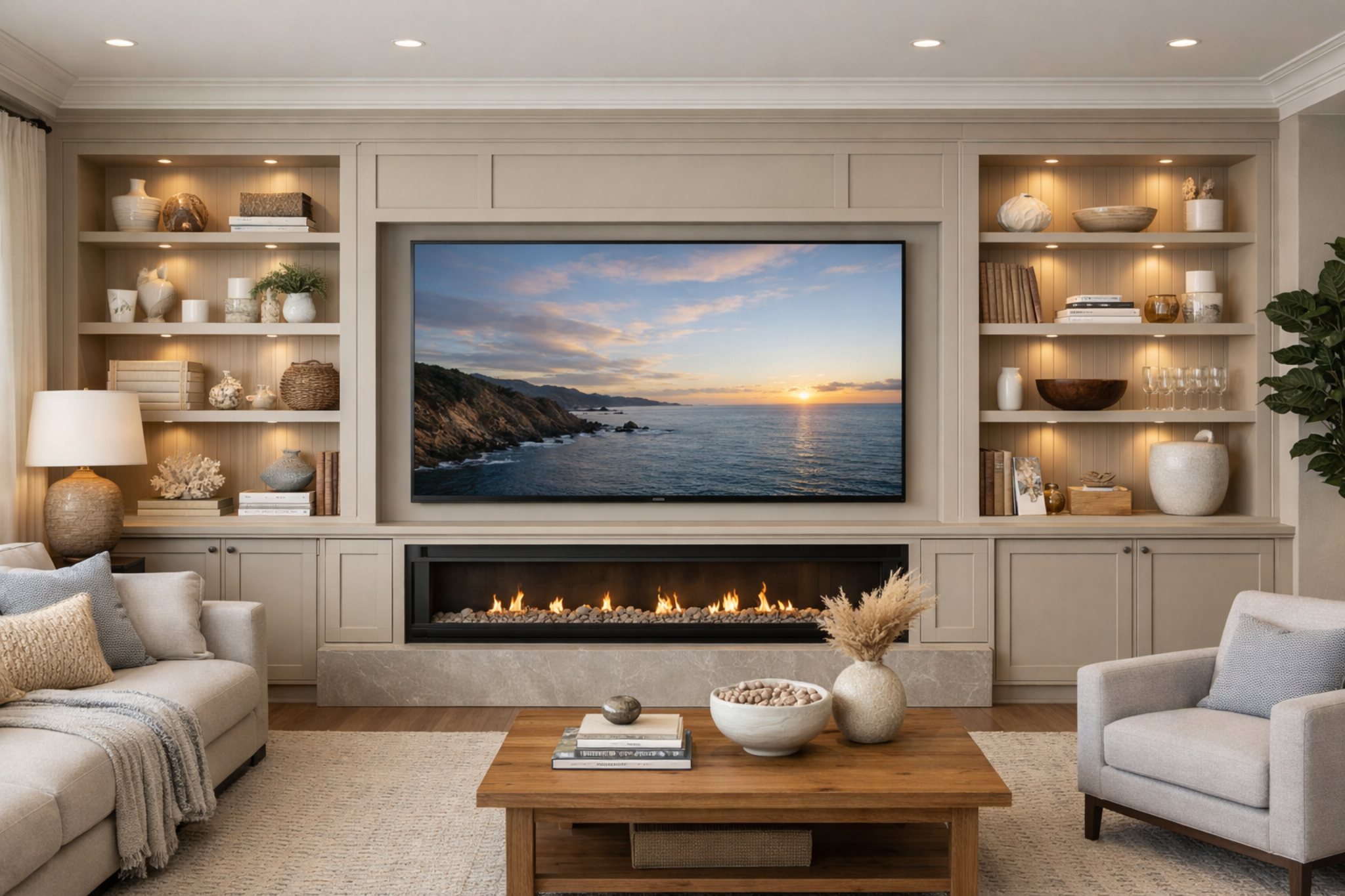
Entertainment cabinetry has to coordinate television scale, fireplace proportions, speaker needs, wiring access, display storage, closed storage, and the architecture of the wall.
Each space needs a different planning posture. The goal is to solve function, proportion, finish direction, storage behavior, and installation risk before the room becomes a set of disconnected selections.
The built-in should relate to ceiling height, fireplace width, television size, wall length, and adjacent openings.
Wiring, outlets, speakers, network equipment, ventilation, and future access should be designed into the cabinetry, not improvised after installation.
Open shelving works best when the client wants to style and maintain it. Closed storage is often more valuable for daily living.
These are the details that typically shape cost, lead time, storage quality, and how finished the room feels after installation.
Study the proportion, finish weight, storage visibility, lighting, and how the cabinetry connects to the surrounding room.
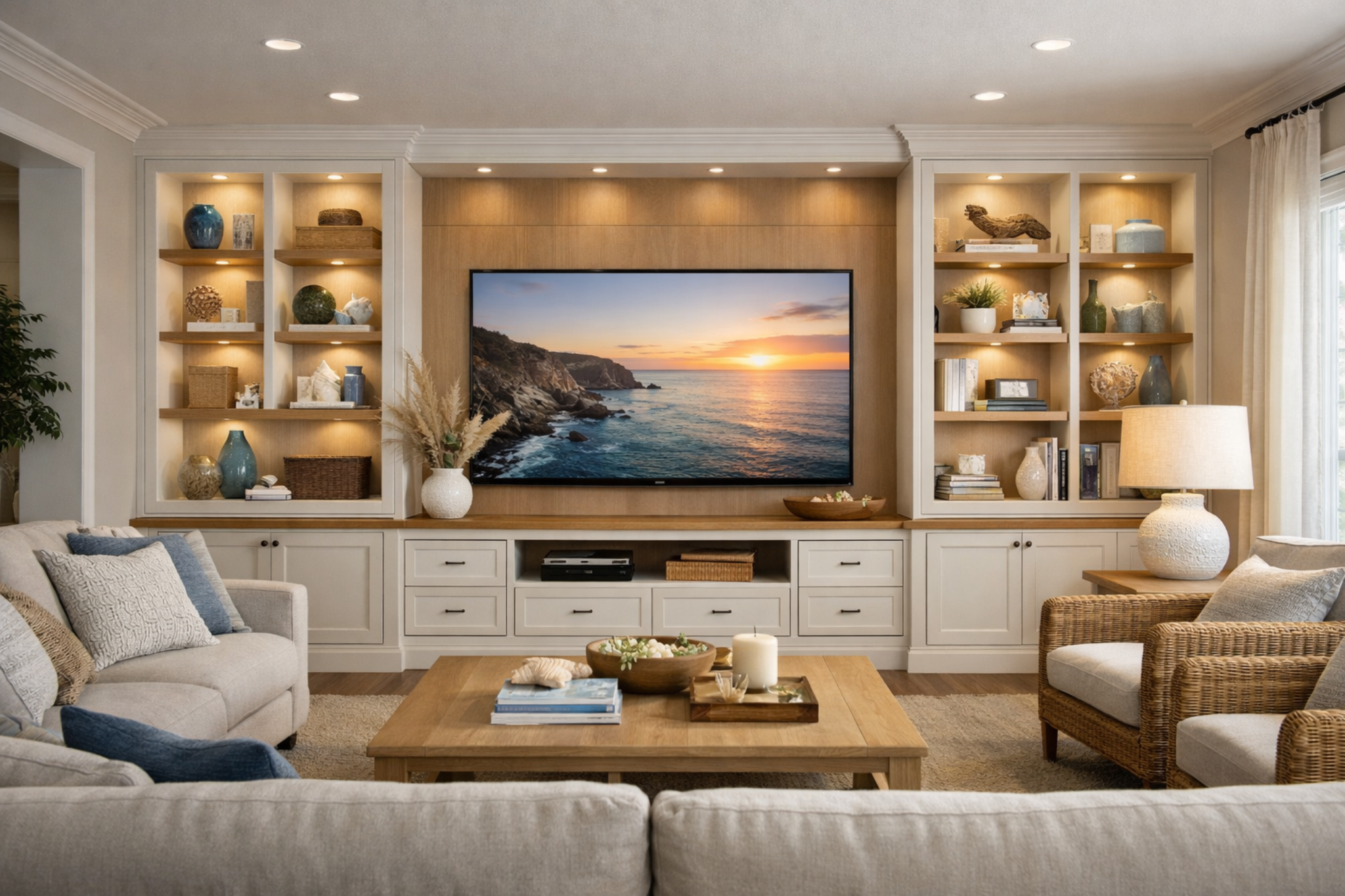
The space should support the rest of the home through material tone, architectural rhythm, and a level of function that feels intentional.
Start with what the space needs to solve, then shape the cabinetry, storage, materials, and details around that purpose.