Finish palette
Eclectic rooms can use stone, tile, wood, glass, metal, wallpaper, color, woven texture, and vintage pieces, but not all with equal volume.
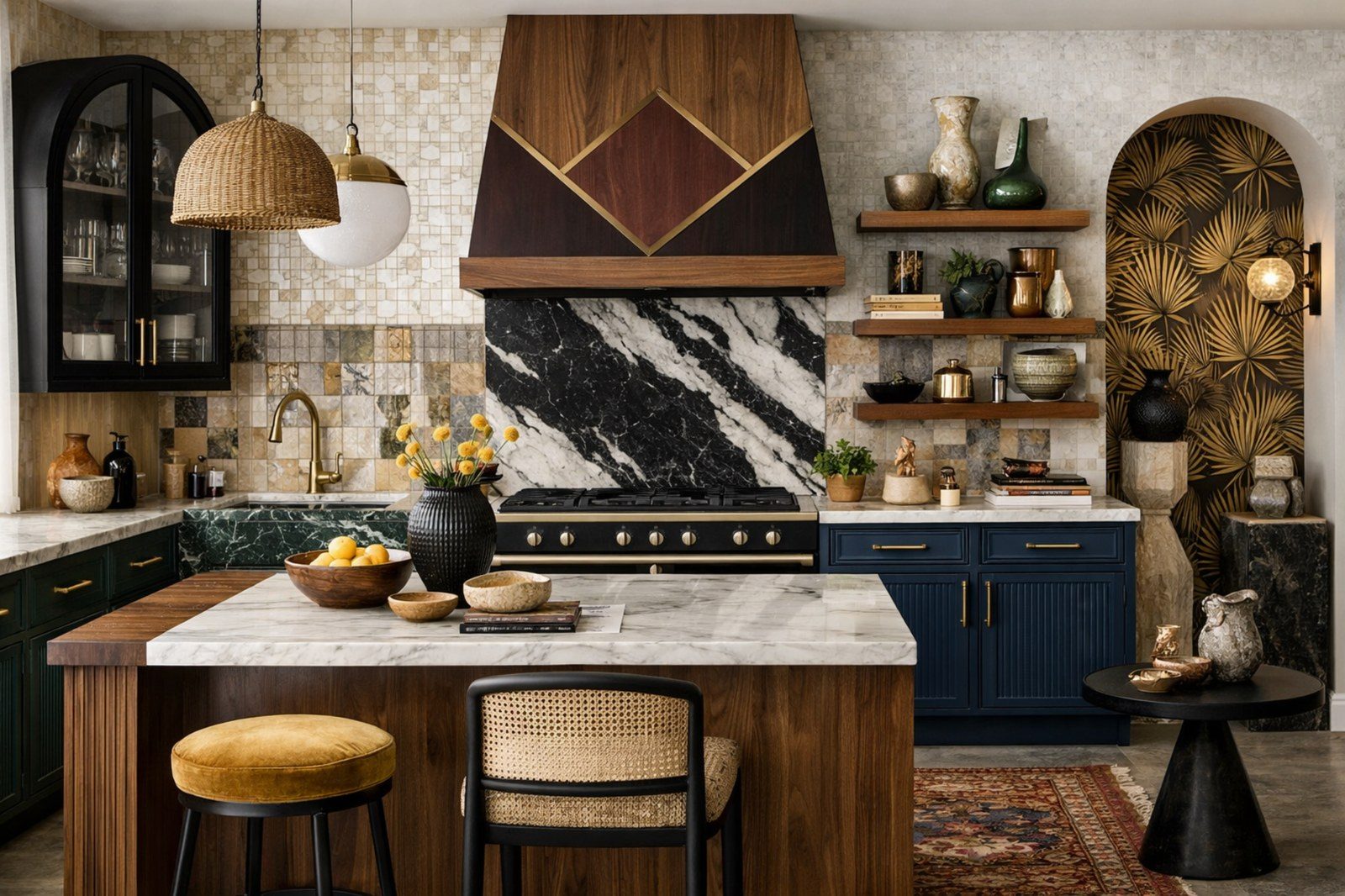
Eclectic cabinetry allows personality, contrast, color, pattern, and mixed influences. The premium version is not a free-for-all. It needs one clear organizing logic so the room feels curated instead of noisy.
Eclectic design works by layering contrast with control. One element usually leads: a strong cabinet color, a sculptural hood, a patterned tile, a dramatic stone, vintage hardware, or an unexpected material mix. The rest of the room must decide whether to support, quiet down, or create tension. Without that hierarchy, the room becomes visually expensive but unresolved.
Clients who want personality, color, collected character, and a room that does not look copied from a single style category.
The value is individuality. Eclectic rooms can make a kitchen, bar, office, or built-in feel memorable and personal while still being functional and premium.
Cost often rises with multiple cabinet finishes, specialty hardware, custom hoods, decorative inserts, statement tile, mixed countertop materials, unique lighting, and the additional design discipline needed to make varied elements align.
Eclectic drift happens fast. If every selection is a statement, the room loses the hierarchy that makes contrast feel intentional.
A style becomes real through the cabinetry elevation. Door shape, construction type, reveal spacing, drawer rhythm, hood treatment, appliance integration, and open-versus-closed storage determine whether the room feels authentic or simply decorated.
The cabinetry does not have to announce the style loudly. It needs to support the room consistently, from the most visible wall to the storage zones that clients use every day.
Paint, stain, countertop, backsplash, hardware, lighting, and texture need to work as a system. A beautiful inspiration image is only useful when the materials can be specified, maintained, and lived with honestly.
Eclectic rooms can use stone, tile, wood, glass, metal, wallpaper, color, woven texture, and vintage pieces, but not all with equal volume.
Countertops should either calm the room or become the planned hero. A dramatic slab and a dramatic backsplash usually need careful separation.
Backsplashes, hood materials, cabinet color, and lighting should be studied together before commitment because they will define the room’s personality.
One repeated finish, color, or material should connect the room so it feels composed rather than assembled from unrelated ideas.
Eclectic hardware can include mixed metals, vintage-inspired pulls, glass knobs, brass, bronze, black, or sculptural forms. The mix needs a placement rule and a scale rule so it feels designed.
Eclectic is strong for kitchens, bars, powder-adjacent vanities, entertainment walls, offices, and feature cabinetry where the client wants a distinctive room with clear design authorship.
Eclectic design needs a clear hierarchy. These images help evaluate where color, pattern, hardware, and texture can add personality without overwhelming the cabinetry.
Evaluate cabinet rhythm, finish balance, storage visibility, hardware scale, and how the room supports everyday use without drifting from the style direction.
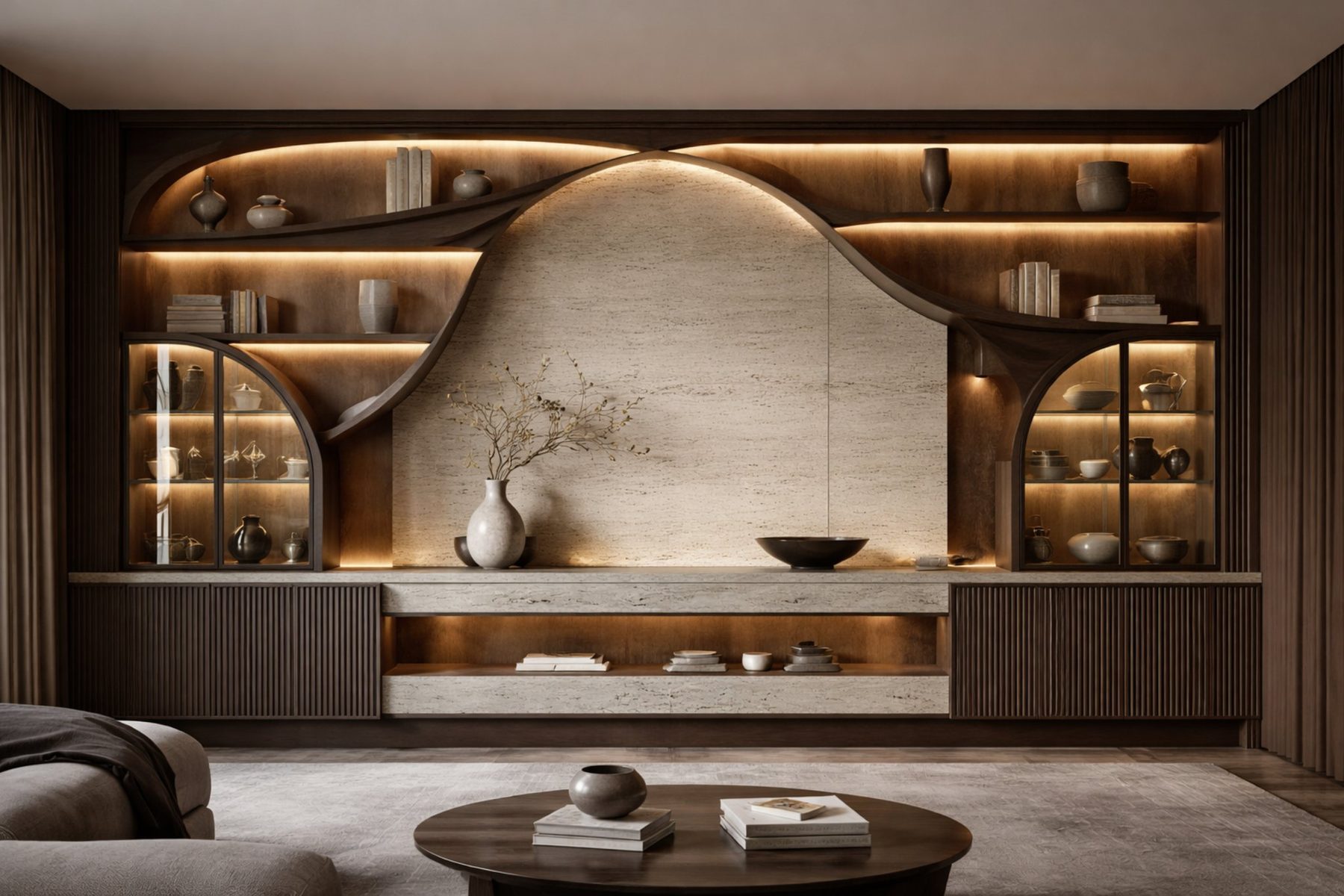
Use this view to confirm that the same design language can carry into another room, built-in, or cabinetry moment while still feeling natural to the home.
Client-facing style education should be honest about maintenance, specification risk, and the places where the look can stop adding value.
More layered rooms often include more surfaces to clean: open shelves, glass, detailed hardware, textured tile, decorative lighting, and specialty finishes. Clients should understand that personality can bring more upkeep.
Eclectic style is less forgiving of late substitutions. Swapping one finish, tile, or light fixture can disrupt the entire balance because the room depends on relationships between elements.
The stronger the style direction, the more important storage planning becomes. Visible clutter, weak appliance planning, and underbuilt drawer organization can damage the final look quickly.
Lighting temperature and placement change the style dramatically. Warmth, shadow, and undercabinet lighting often determine whether the room feels finished at night.
Door samples, finish samples, stone slabs, hardware finish chips, tile, and lighting temperature should be reviewed together whenever possible. One sample alone rarely tells the full truth.
The right style should still make sense after the novelty wears off. A premium room needs identity, but it also needs durability, function, and restraint.
Eclectic can borrow from contemporary, traditional, coastal, industrial, mid-century, or global influences. The lead style should establish structure, while eclectic choices add personality in controlled doses.
Before approving the direction, confirm whether the room has the right architecture, light level, maintenance tolerance, storage plan, and budget posture to support the look. That is what keeps the finished space from feeling forced.
Black Label turns style preference into cabinetry planning, material hierarchy, storage decisions, and a finished result that feels intentional under real use.