Finish palette
Terracotta, clay, limestone, travertine-look porcelain, quartzite, warm quartz, handmade tile, plaster-like surfaces, wood, woven texture, black metal, bronze, and leather tones all fit.
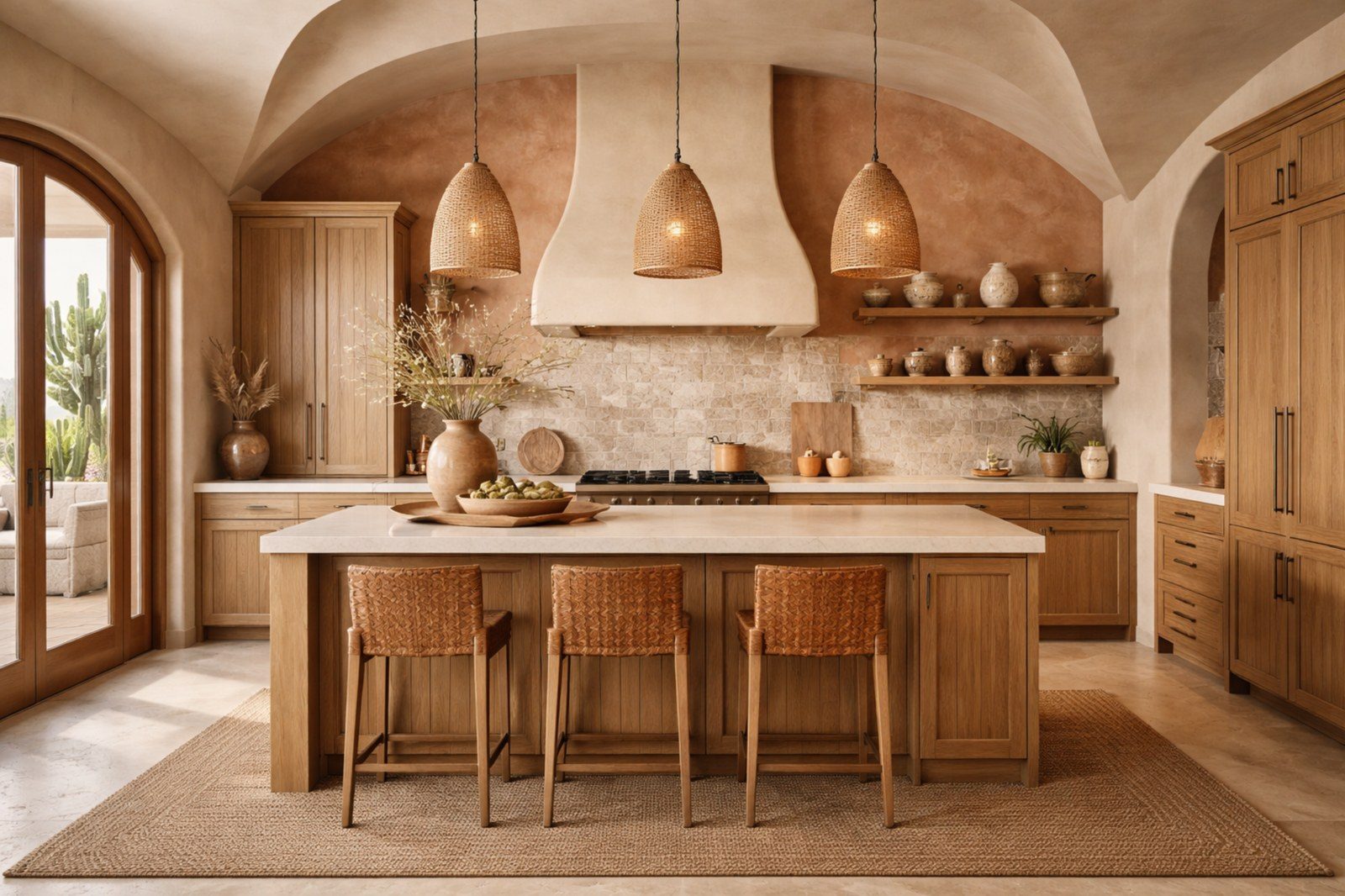
Southwestern cabinetry uses earth tones, natural wood, clay-like color, textured surfaces, and regional warmth. The refined version feels grounded and architectural, not costume-driven.
Southwestern design is strongest when it starts with material and architecture: plaster-like walls, warm woods, desert neutrals, clay tones, stone, tile, black or bronze metal, and generous texture. Cabinetry should support the grounded palette while keeping the room edited enough for modern living.
Clients who want warmth, texture, natural material, desert-influenced color, and a room with stronger regional character.
The value is depth. Southwestern rooms can feel distinctive, warm, and architectural while still supporting practical cabinetry, storage, and modern appliances.
Cost usually moves with natural wood, specialty stains, plaster or plaster-look finishes, custom hoods, handmade tile, warm stone, arched openings, open shelving, and material coordination around texture.
The room should feel grounded, not themed. Material quality and restraint matter more than novelty or obvious regional symbols.
A style becomes real through the cabinetry elevation. Door shape, construction type, reveal spacing, drawer rhythm, hood treatment, appliance integration, and open-versus-closed storage determine whether the room feels authentic or simply decorated.
The cabinetry does not have to announce the style loudly. It needs to support the room consistently, from the most visible wall to the storage zones that clients use every day.
Paint, stain, countertop, backsplash, hardware, lighting, and texture need to work as a system. A beautiful inspiration image is only useful when the materials can be specified, maintained, and lived with honestly.
Terracotta, clay, limestone, travertine-look porcelain, quartzite, warm quartz, handmade tile, plaster-like surfaces, wood, woven texture, black metal, bronze, and leather tones all fit.
Countertops should balance durability with warmth. Soft movement and honed or leathered looks often suit the room better than icy, polished surfaces.
Backsplashes can be slab, handmade tile, stone, plaster-like finish, or a textured field tile depending on the cleaning zone.
Earth colors should be used with discipline: clay, rust, sand, cream, tobacco, olive, black, and warm wood are enough without adding every desert color.
Matte black, bronze, aged brass, iron-like finishes, leather-detail pulls, simple knobs, and substantial linear pulls can work. Hardware should feel grounded and tactile.
Southwestern works well in kitchens, bathroom vanities, bars, range hood walls, fireplaces, entertainment walls, and built-ins where earth tone, texture, and architecture create value.
Southwestern design depends on earth tones, texture, and grounded materials. The cabinetry should support the architecture instead of turning the room into a theme.
Evaluate cabinet rhythm, finish balance, storage visibility, hardware scale, and how the room supports everyday use without drifting from the style direction.
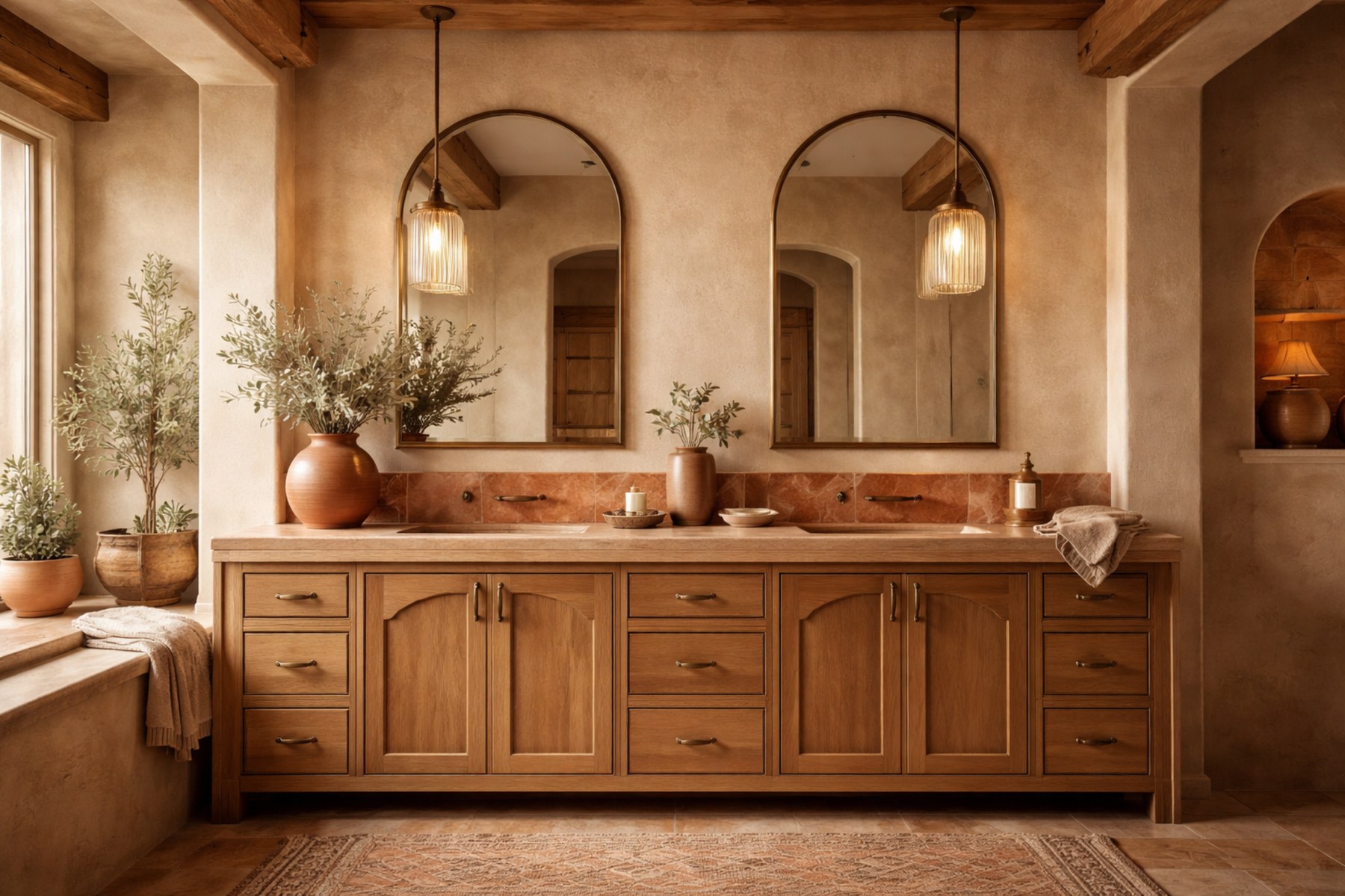
Use this view to confirm that the same design language can carry into another room, built-in, or cabinetry moment while still feeling natural to the home.
Client-facing style education should be honest about maintenance, specification risk, and the places where the look can stop adding value.
Textured tile, grout, wood, matte finishes, and plaster-like surfaces require care planning. Dust can settle on open shelves and textured surfaces, while darker hardware may show water spots depending on finish.
Southwestern can become heavy if every surface is warm, textured, and dark. It needs light balance, quiet planes, and a clear hierarchy between wood, stone, tile, and color.
The stronger the style direction, the more important storage planning becomes. Visible clutter, weak appliance planning, and underbuilt drawer organization can damage the final look quickly.
Lighting temperature and placement change the style dramatically. Warmth, shadow, and undercabinet lighting often determine whether the room feels finished at night.
Door samples, finish samples, stone slabs, hardware finish chips, tile, and lighting temperature should be reviewed together whenever possible. One sample alone rarely tells the full truth.
The right style should still make sense after the novelty wears off. A premium room needs identity, but it also needs durability, function, and restraint.
Southwestern blends well with Mediterranean, rustic, contemporary, transitional, and tropical influences. It can feel modern desert, old-world, or relaxed depending on cabinet simplicity and surface texture.
Before approving the direction, confirm whether the room has the right architecture, light level, maintenance tolerance, storage plan, and budget posture to support the look. That is what keeps the finished space from feeling forced.
Black Label turns style preference into cabinetry planning, material hierarchy, storage decisions, and a finished result that feels intentional under real use.