Finish palette
Light stone, warm white quartz, soft terrazzo influence, pale tile, plaster-like finishes, oak shelving, linen texture, and simple metals all fit.
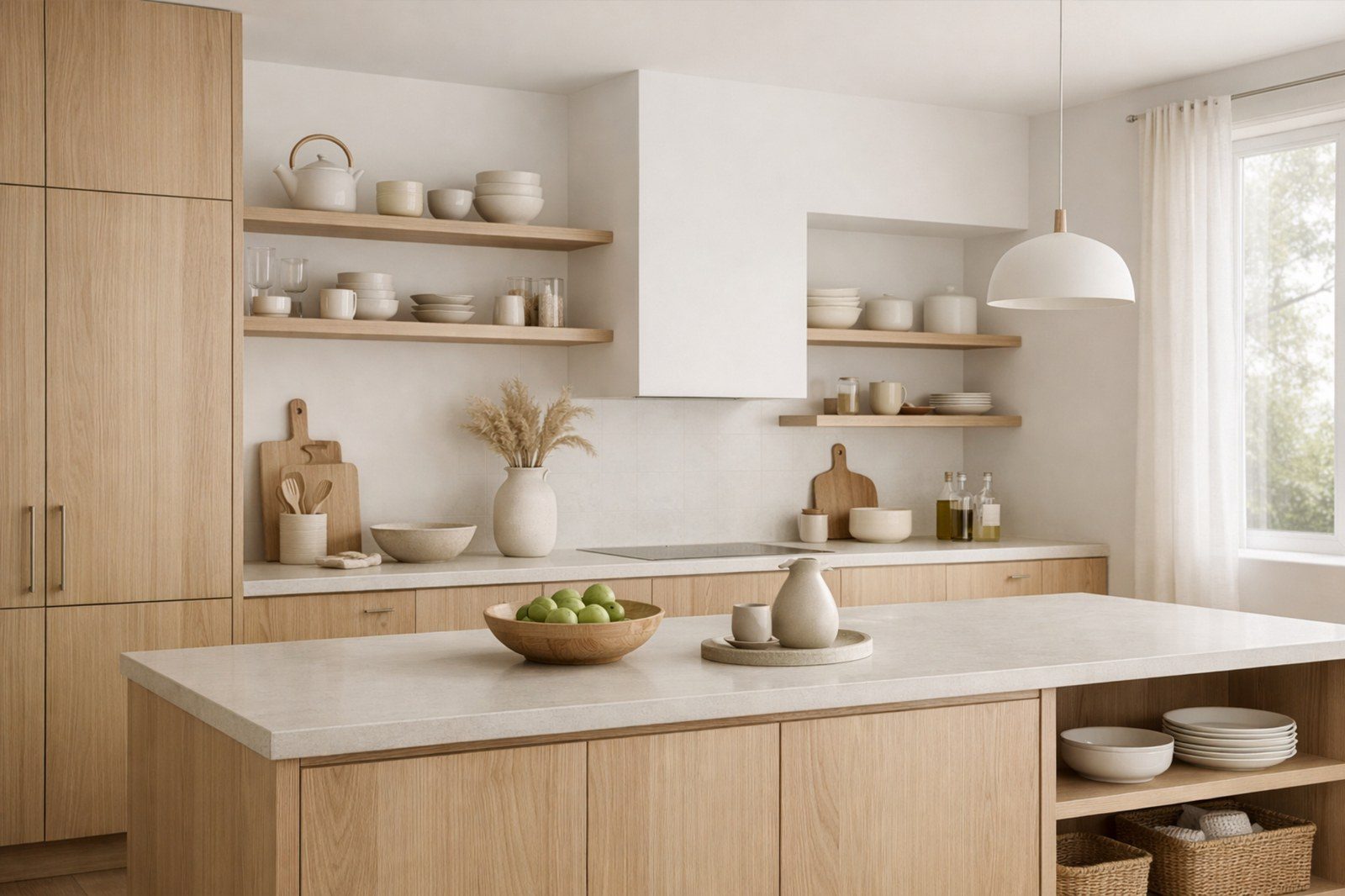
Scandinavian cabinetry is soft minimalism with purpose. It uses light woods, warm whites, clean storage, natural texture, and visual restraint to make a room feel calm without feeling empty.
Scandinavian design depends on simplicity, but not sterility. The warmth comes from wood tone, natural light, soft contrast, practical storage, tactile materials, and a limited palette. The cabinetry should support daily life quietly, with enough organization that the calm can actually be maintained.
Clients who want a bright, peaceful, low-noise room with lighter woods, practical storage, and a softer alternative to modern minimalism.
The value is emotional clarity. Scandinavian spaces can make kitchens, baths, and storage-heavy rooms feel calmer, lighter, and easier to live in.
Cost usually depends on wood quality, veneer or slab consistency, storage interiors, lighting, open shelving, integrated appliances, and precise installation of simple details.
The style can become too plain if every finish is pale and every shape is simplified. Subtle contrast and texture are necessary.
Style starts with the cabinet elevation. Door shape, rail width, reveal spacing, drawer configuration, open versus closed storage, hood treatment, and appliance integration all affect whether the room reads as scandinavian or simply borrowed from a photo.
The cabinetry does not need to shout the style. It needs to support it consistently across the kitchen, bath, bar, pantry, laundry, office, or built-in application.
A style direction becomes real through surface choices. Paint, stain, countertop, backsplash, hardware, lighting, and texture need to work together instead of competing for attention.
Light stone, warm white quartz, soft terrazzo influence, pale tile, plaster-like finishes, oak shelving, linen texture, and simple metals all fit.
Backsplashes should be quiet and tactile rather than loud.
A small amount of black, brass, or darker wood can keep the room from feeling washed out.
Natural light and warm artificial light are important to the mood.
Integrated pulls, small knobs, slim pulls, pale metals, black accents, or warm brass. Hardware should feel quiet, practical, and scaled to the cabinetry.
Scandinavian style is strong for kitchens, baths, laundry rooms, closets, offices, and pantries where calm, storage, and natural warmth are priorities.
Scandinavian spaces should feel light, functional, and warm. The key is softness, clarity, and enough texture to keep minimalism from feeling empty.
Evaluate cabinet rhythm, finish balance, storage visibility, hardware scale, and how the room supports everyday use without drifting from the style direction.
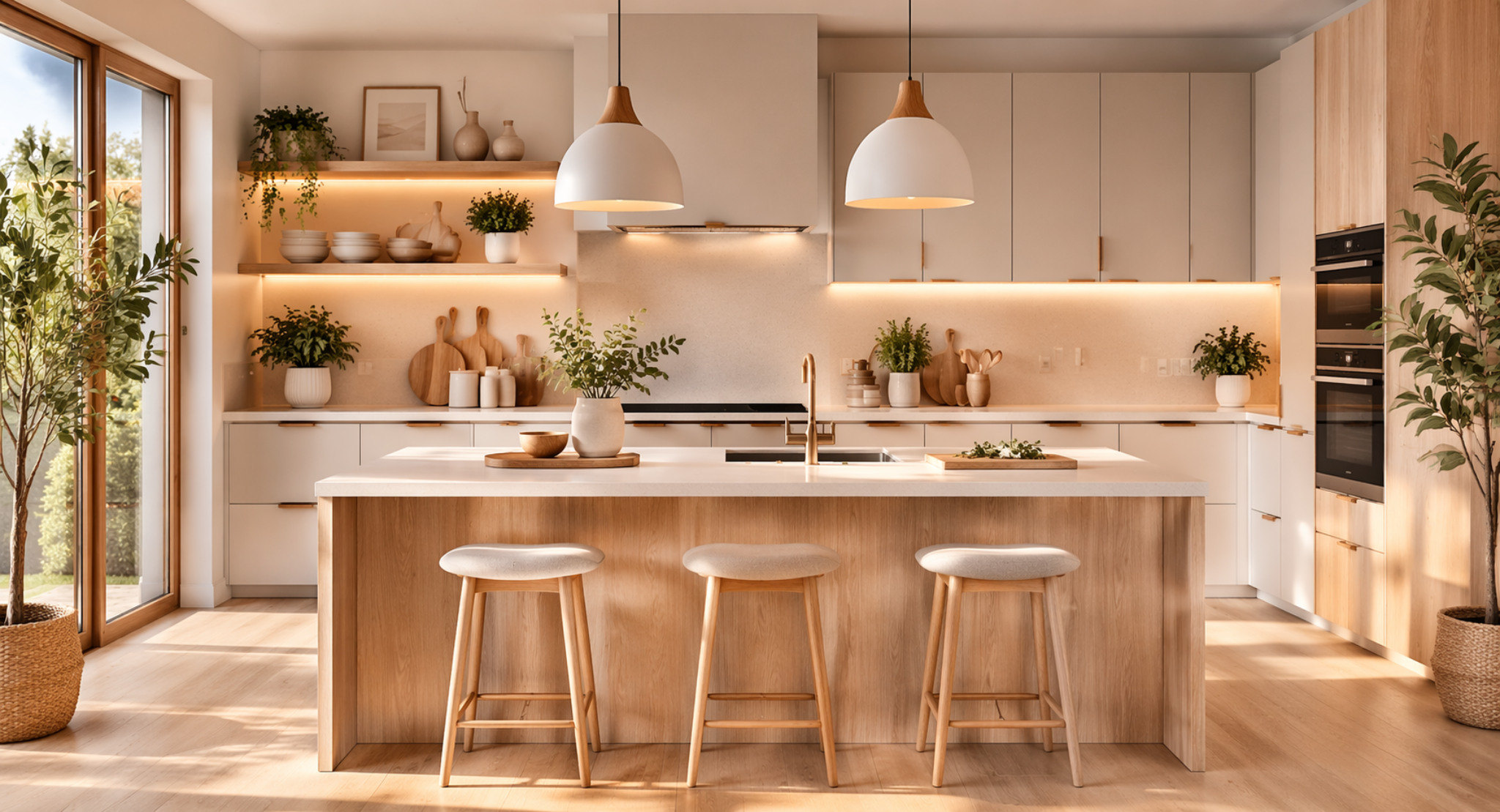
Use this view to confirm that the same design language can carry into another room, built-in, or cabinetry moment while still feeling natural to the home.
A client-facing style page should be honest about maintenance, specification risk, and the places where the style can stop adding value.
Light surfaces show spills, dust, and daily smudges differently than dark surfaces. Open shelves and pale grout need realistic care. Wood should be protected from standing water and harsh cleaning.
Scandinavian style depends on restraint and organization. If the household needs many visible appliances or decorative items, the storage plan must work harder.
The stronger the style direction, the more important storage planning becomes. Visible clutter can weaken even a beautiful palette.
Lighting temperature and placement change the style dramatically. Warmth, shadow, and undercabinet lighting often determine whether the room feels finished at night.
Door samples, finish samples, stone slabs, hardware finish chips, and lighting temperature should be reviewed together whenever possible.
The right style should still make sense after the novelty wears off. A premium room needs identity, but it also needs durability, function, and restraint.
The strongest scandinavian rooms do not simply copy a style label. They translate it into cabinetry, materials, storage, lighting, and details that fit the home and the client’s use pattern.
Before approving the direction, confirm whether the room has the right architecture, light level, maintenance tolerance, storage plan, and budget posture to support the look. That is what keeps the finished space from feeling forced.
Black Label turns style preference into cabinetry planning, material hierarchy, storage decisions, and a finished result that feels intentional under real use.