Finish palette
Walnut, rift oak, warm medium stains, muted whites, black accents, brass, terrazzo-inspired surfaces, quiet quartz, and restrained stone all fit the direction.
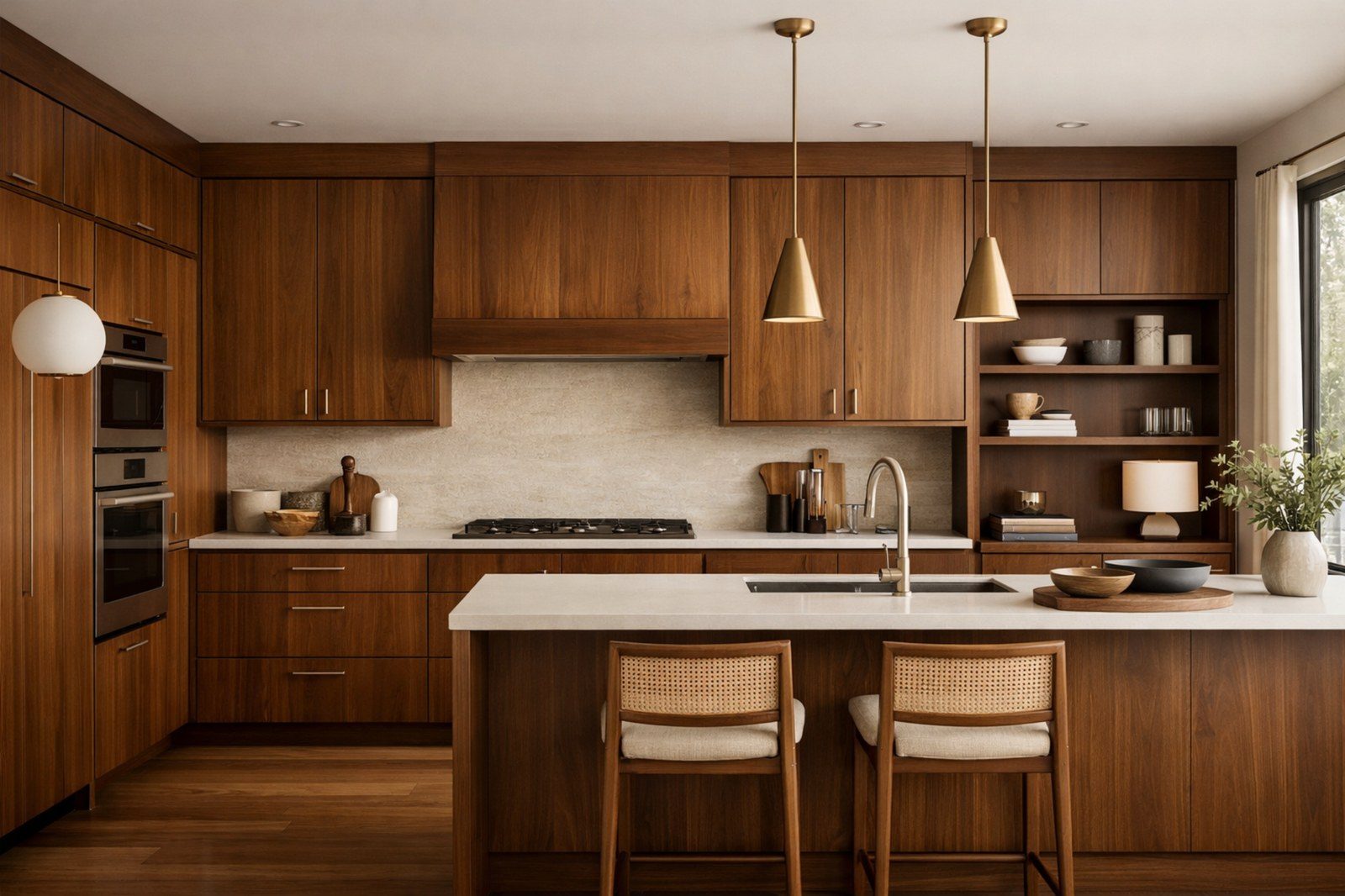
Mid-century modern cabinetry brings warmth, clean geometry, and a subtle retro influence. The goal is not to recreate a period set; it is to use wood, line, proportion, and restraint to create a room with character and longevity.
This style usually works through natural wood, horizontal emphasis, furniture-like proportions, simplified doors, warm metals, and a slightly lower visual center of gravity. It can be playful, but the premium version stays controlled. A successful room nods to the era through material and silhouette while still supporting modern storage, appliances, and maintenance.
Clients who love warm wood, clean lines, curated character, and a design direction that feels personal without becoming overly decorative.
Mid-century modern is valuable when it adds warmth and identity to a clean room. It can make cabinetry feel more furniture-like and less generic.
Cost is driven by wood species, veneer consistency, grain direction, slab or flat-panel doors, integrated panels, specialty hardware, custom bars, open shelving, and careful lighting.
The style weakens when it becomes too literal. Bright retro color, novelty shapes, and too many period references can date the room quickly.
Style starts with the cabinet elevation. Door shape, rail width, reveal spacing, drawer configuration, open versus closed storage, hood treatment, and appliance integration all affect whether the room reads as mid-century modern or simply borrowed from a photo.
The cabinetry does not need to shout the style. It needs to support it consistently across the kitchen, bath, bar, pantry, laundry, office, or built-in application.
A style direction becomes real through surface choices. Paint, stain, countertop, backsplash, hardware, lighting, and texture need to work together instead of competing for attention.
Walnut, rift oak, warm medium stains, muted whites, black accents, brass, terrazzo-inspired surfaces, quiet quartz, and restrained stone all fit the direction.
A backsplash can introduce subtle geometry, but it should not compete with wood grain.
Countertops should either calm the wood or create a deliberate contrast.
Lighting often benefits from warmer temperatures and simple forms.
Slim pulls, tab pulls, simple knobs, understated brass, black, or satin metal. Hardware should look integrated with the furniture language rather than decorative on top of it.
Mid-century modern works especially well in kitchens, bars, offices, entertainment centers, vanities, and media rooms where wood and line can become the main character.
Mid-century modern should feel warm and composed, not novelty-driven. Study the wood tone, horizontal rhythm, hardware restraint, and surrounding surfaces.
Evaluate cabinet rhythm, finish balance, storage visibility, hardware scale, and how the room supports everyday use without drifting from the style direction.
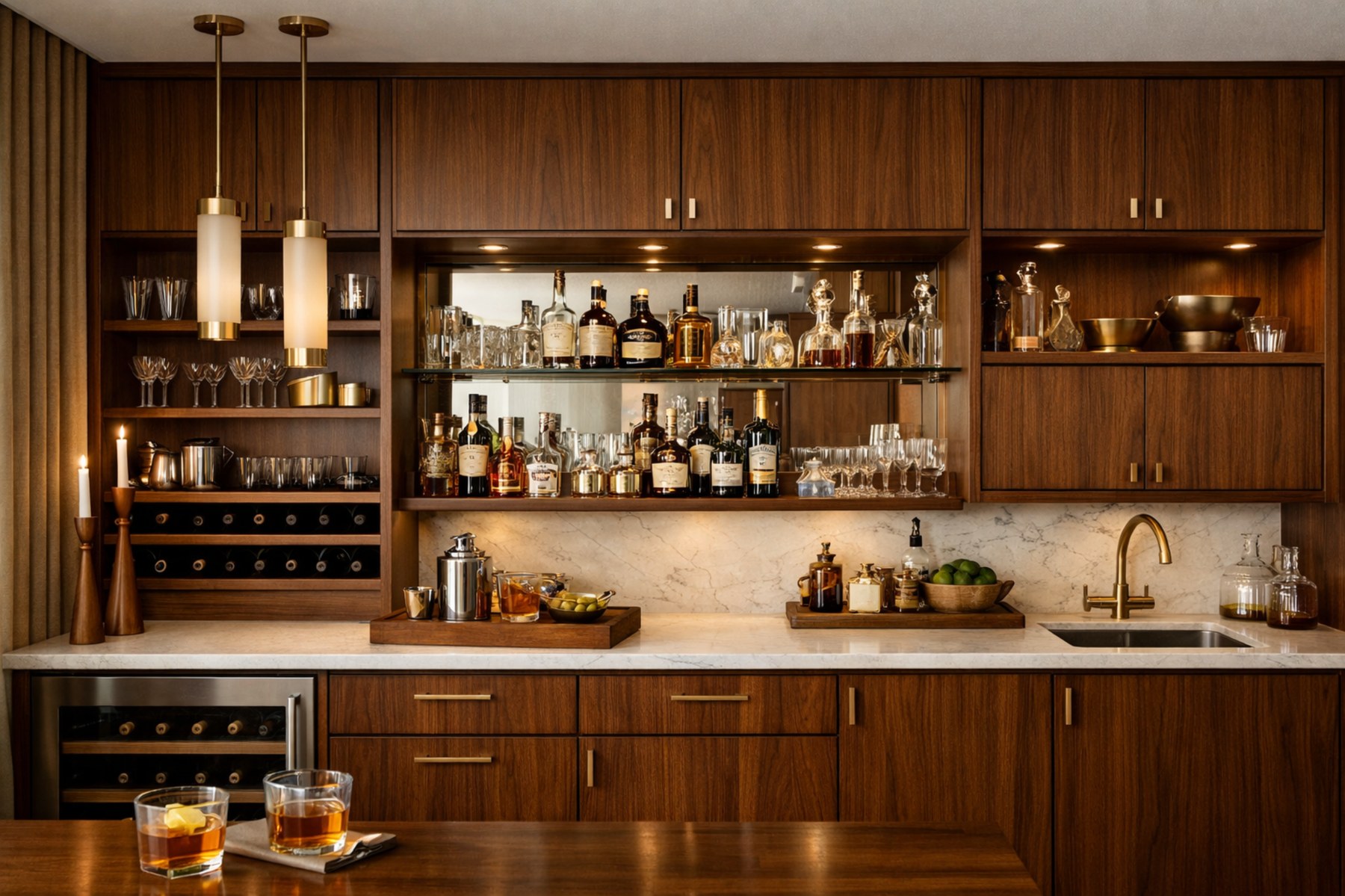
Use this view to confirm that the same design language can carry into another room, built-in, or cabinetry moment while still feeling natural to the home.
A client-facing style page should be honest about maintenance, specification risk, and the places where the style can stop adding value.
Wood-forward rooms need realistic expectations around sunlight, grain variation, water exposure, and finish care. Slab doors also reveal fingerprints and alignment more readily than framed doors.
This style depends on material warmth. If the budget does not support good wood tones or if the room lacks light, it can become flat or heavy.
The stronger the style direction, the more important storage planning becomes. Visible clutter can weaken even a beautiful palette.
Lighting temperature and placement change the style dramatically. Warmth, shadow, and undercabinet lighting often determine whether the room feels finished at night.
Door samples, finish samples, stone slabs, hardware finish chips, and lighting temperature should be reviewed together whenever possible.
The right style should still make sense after the novelty wears off. A premium room needs identity, but it also needs durability, function, and restraint.
The strongest mid-century modern rooms do not simply copy a style label. They translate it into cabinetry, materials, storage, lighting, and details that fit the home and the client’s use pattern.
Before approving the direction, confirm whether the room has the right architecture, light level, maintenance tolerance, storage plan, and budget posture to support the look. That is what keeps the finished space from feeling forced.
Black Label turns style preference into cabinetry planning, material hierarchy, storage decisions, and a finished result that feels intentional under real use.